LED Street Light Maintenance Guide: Why Tool-Free Design Matters
When selecting LED street lights for a road lighting project, buyers often compare wattage, luminous efficacy, optical distribution, IP rating, driver brand and price.
However, another important factor is often overlooked:
How easy will the street light be to maintain after installation?
LED street lights are designed for long-term outdoor operation, but this does not mean that maintenance will never be required. During the operating life of a lighting system, components such as LED drivers, surge protection devices, connectors or control modules may need inspection or replacement.
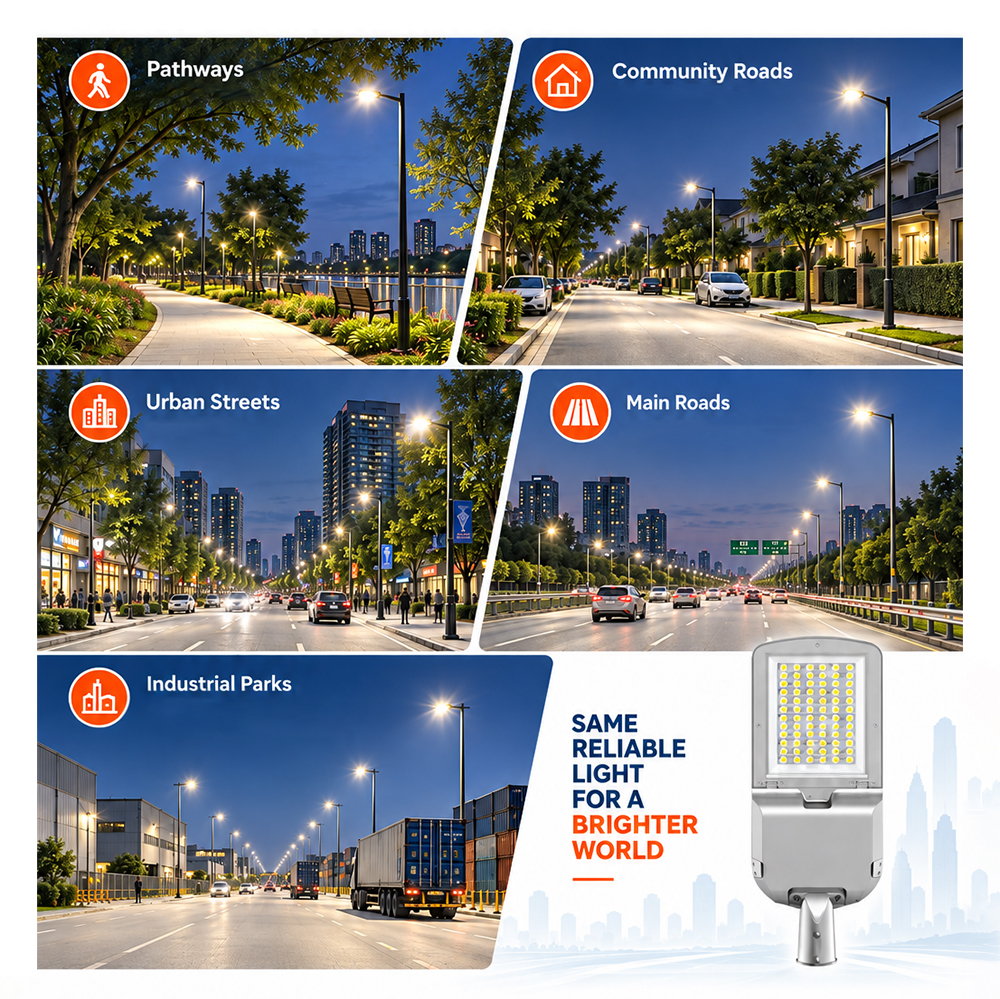
For a project with only a few luminaires, the difference may seem small. But for municipal roads, highways, industrial parks and other projects involving hundreds or thousands of street lights, maintenance-friendly design can make future servicing much easier.
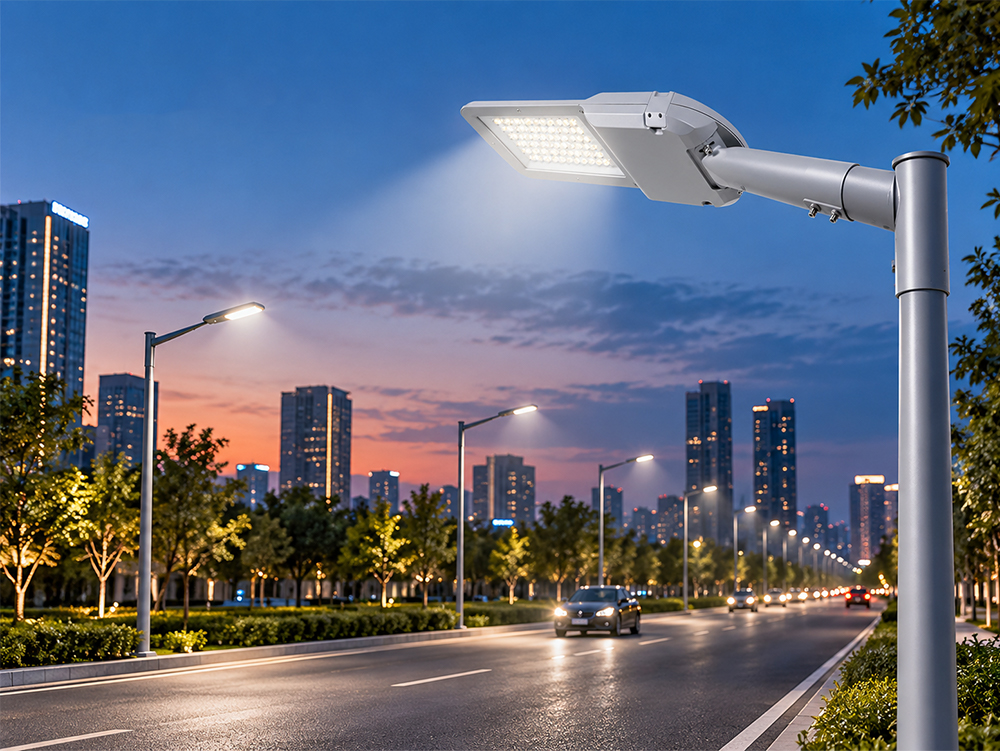
Why Does Street Light Maintenance Matter?
Street lights are normally installed several meters above the ground. Maintenance therefore involves more than simply opening a luminaire.
Depending on the project, servicing may require:
- Maintenance personnel
- Lifting equipment
- Road access arrangements
- Electrical inspection
- Replacement components
If the luminaire requires several tools and complicated disassembly before technicians can reach the electrical components, every maintenance operation becomes more time-consuming.
This issue becomes more important as project scale increases.
A good street light should therefore not only perform well when it is first installed. It should also be designed so that technicians can inspect and replace key components more conveniently in the future.
This is why maintenance should be considered during product selection rather than only after a problem occurs.
What Makes an LED Street Light Maintenance-Friendly?
A maintenance-friendly LED street light is designed to reduce unnecessary operations during inspection and component replacement.
Typical features may include:
- Tool-free housing access
- Easily accessible electrical components
- Replaceable LED drivers
- Quick electrical connectors
- Separate optical and electrical areas
- Automatic power disconnection
- Adjustable installation components
These features do not change the basic function of the street light, but they can make a significant difference during long-term operation.
For example, traditional street lights may require technicians to remove several screws before accessing the driver compartment.
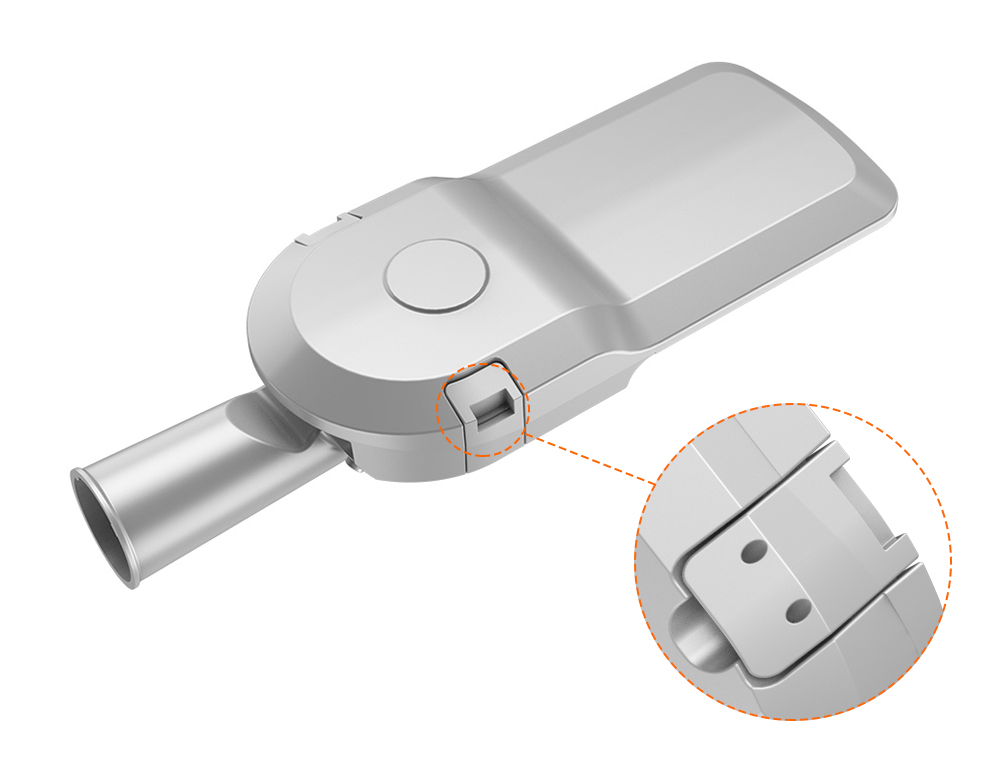
A tool-free structure allows the housing to be opened using integrated clips or locking mechanisms instead.
This is especially useful during high-level maintenance, where reducing unnecessary tools and small removable parts can simplify the servicing process.
Tool-Free Access and Replaceable Drivers
The LED driver is one of the key electrical components inside a street light.
Even when high-quality drivers are selected, project owners should still consider what happens if a driver needs to be inspected or replaced several years after installation.
In some luminaires, replacing the driver may require extensive disassembly and manual rewiring.
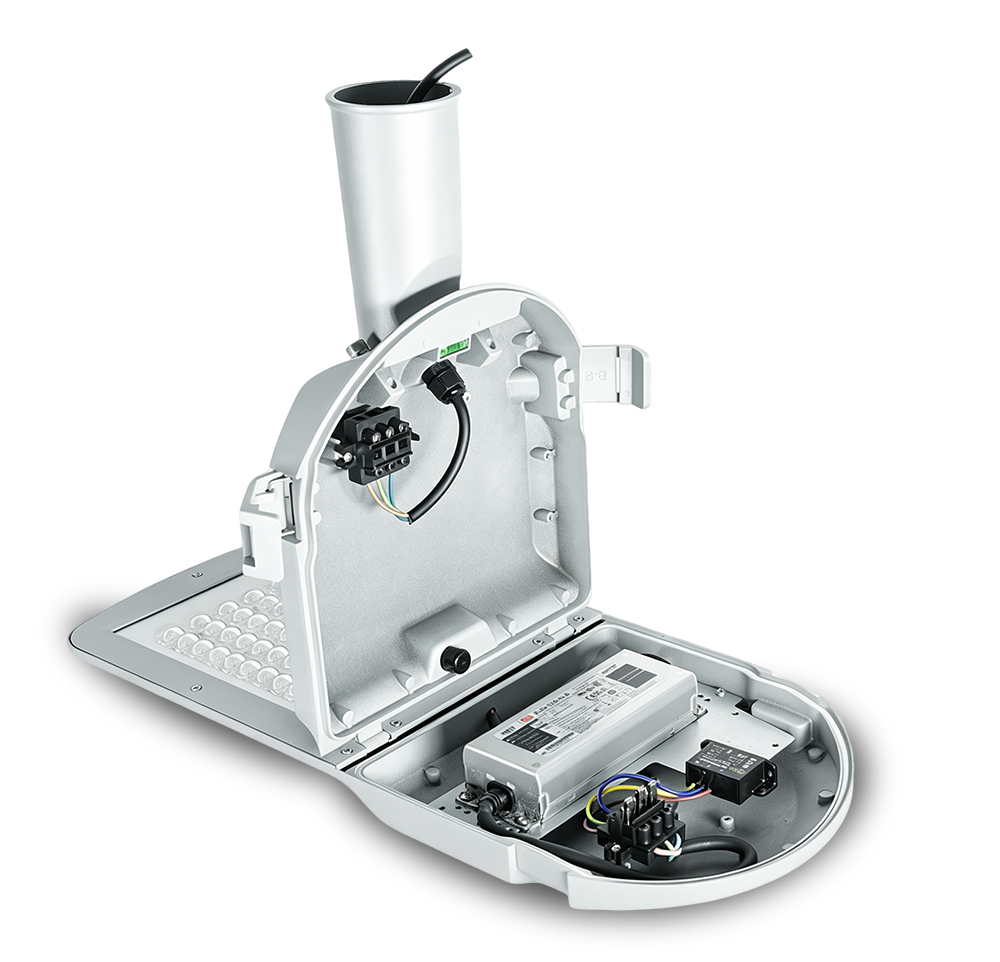
A maintenance-friendly structure makes the electrical compartment easy to access and allows the driver to be removed separately from the main luminaire.
The MIC LED F-3 street light uses a tool-free opening design for the driver compartment. Its driver plate can also be removed for easier inspection or replacement.
This allows maintenance personnel to focus on the affected electrical component instead of replacing or extensively dismantling the complete street light.
For large road projects, this type of modular approach can also make spare-part management more practical.
Instead of keeping complete luminaires only for maintenance purposes, project operators can prepare commonly required electrical components according to the maintenance plan.
Quick Connectors and Automatic Power Disconnection
Opening the luminaire is only one part of the maintenance process.
Technicians must also disconnect and reconnect electrical components.
Traditional wiring may require individual cables to be removed manually from terminals before the driver or another component can be replaced.
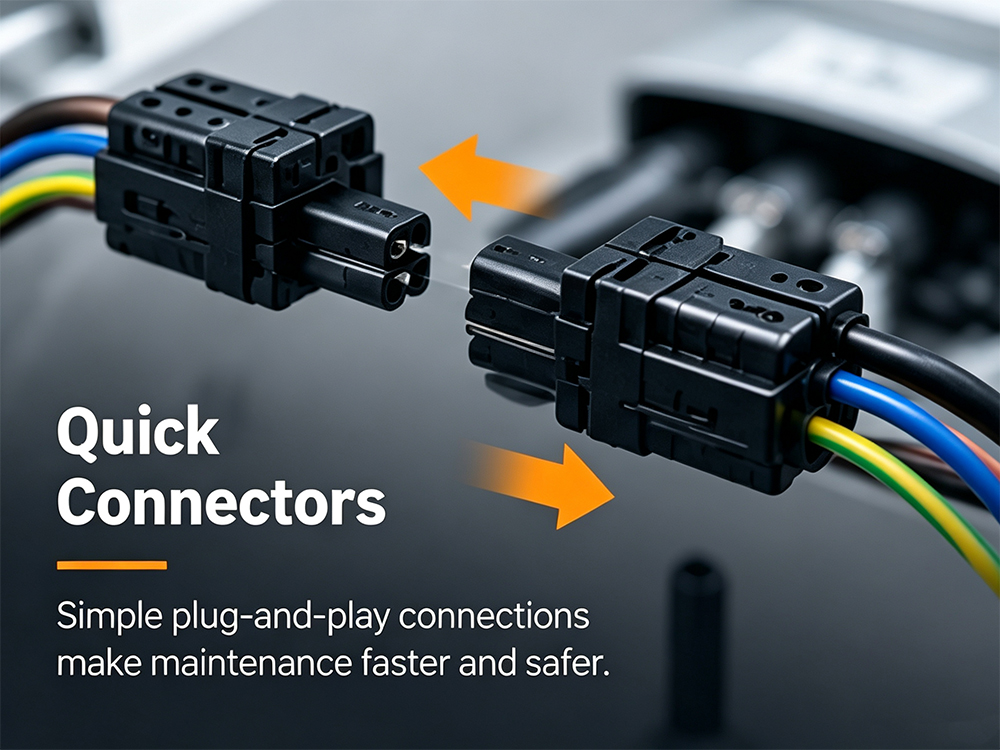
Quick connectors help simplify this process.
The F-3 street light uses convenient electrical connections that allow components to be disconnected more easily during servicing.
Another useful feature is automatic power disconnection.
When the F-3 housing is opened, the internal power connection is automatically disengaged, providing an additional safeguard during maintenance.
This does not replace proper electrical isolation procedures. Maintenance personnel should always follow local electrical safety requirements before working on street lighting equipment.
However, from a luminaire design perspective, automatic disconnection provides an additional layer of protection and demonstrates that servicing has been considered during the product development process.
Maintenance-Friendly Design Can Reduce Long-Term Work
The initial purchase price is only one part of the total cost of a street lighting project.
During the operating life of the system, project owners may also need to consider:
- Installation
- Energy consumption
- Inspection
- Maintenance
- Replacement parts
- Future upgrades
Two street lights with similar wattage and lighting performance may require very different maintenance procedures.
For example:
|
Maintenance Item |
Conventional Design |
Maintenance-Friendly Design |
|
Open the housing |
Tools may be required |
Tool-free access |
|
Access the driver |
More disassembly |
Direct access |
|
Replace the driver |
More wiring work |
Replaceable driver plate |
|
Electrical connection |
Manual wiring |
Quick connectors |
|
Maintenance access |
More steps |
Simplified servicing |
For a single luminaire, the difference may not appear significant.
For a large project, however, the same maintenance process may need to be repeated hundreds or thousands of times during the lighting system’s operating life.
This is why buyers should evaluate not only how much a street light costs to purchase, but also how practical it will be to maintain later.
F-3 Street Light: Designed with Maintenance in Mind
MIC LED’s F-3 series combines road lighting performance with a maintenance-oriented structure.
Its design includes features such as:
- Tool-free opening
- Removable driver plate
- Quick electrical connections
- Automatic power disconnection
- Separate functional areas
- Adjustable mounting
- Built-in level indicator
- IP66 protection
These features make the F-3 suitable for road lighting projects where long-term operation and convenient servicing are both important.
The adjustable mounting structure also helps installers position the luminaire during the initial installation.
By combining installation-friendly and maintenance-friendly features, the F-3 is designed not only for the first day of a project but also for the years of operation that follow.
What Should Buyers Check Before Choosing LED Street Lights?
Before placing an order for a large road lighting project, it is useful to look beyond basic specifications such as wattage and lumens.
Buyers can also ask several practical questions:
Can the street light be opened without tools?
If technicians need several tools simply to reach the electrical compartment, future maintenance may become more complicated.
Can the LED driver be replaced independently?
A replaceable driver design makes it possible to service the affected component instead of replacing the complete fixture.
Are quick connectors used inside the luminaire?
Simple electrical connections can make component replacement easier.
Are electrical and optical sections properly separated?
Maintenance of the electrical components should ideally avoid unnecessary disturbance to the LED optical section.
Are spare components available from the manufacturer?
For large projects, access to drivers, SPDs, connectors and other spare parts can be important for long-term maintenance planning.
These questions are simple, but they can help buyers understand whether a street light has truly been designed for long-term project use.
Conclusion
LED street light performance should not be evaluated only by wattage, lumens, efficiency and purchase price.
For long-term road lighting projects, maintenance-friendly design is also worth considering.
Features such as tool-free access, replaceable drivers, quick connectors and automatic power disconnection can simplify future servicing and reduce unnecessary maintenance steps.
The MIC LED F-3 series incorporates these features into a practical road lighting design, helping project owners balance lighting performance with long-term maintainability.
For municipalities, contractors, distributors and infrastructure projects, considering maintenance before purchasing can help create a lighting system that remains practical throughout its operating life.
Planning a Road Lighting Project?
MIC LED provides professional LED street lighting solutions for municipal roads, highways, industrial parks and infrastructure projects.
We can support product selection, lighting design, technical configuration and project-specific requirements.
Contact us for F-3 LED street light specifications and project support.
📧 Email: micled@mic-led.com
🌐 Website: www.mic-led.com
💬 WhatsApp: +86 135 4334 3078