Is a 100,000-Hour LED Lifetime Reliable? Understanding LM-80, TM-21 and ISTMT
When evaluating an LED luminaire, buyers often see lifetime claims such as:
- 50,000 hours
- 80,000 hours
- 100,000 hours
But what do these numbers actually mean?
Does a manufacturer really operate a luminaire continuously for 50,000 or 100,000 hours before publishing the specification?
Usually, no.
For professional road, industrial, port, and infrastructure lighting projects, LED lifetime should be supported by test data, thermal performance, and recognized evaluation methods.
Three terms are especially important:
LM-80, TM-21 and ISTMT.
Understanding how they work together can help project engineers and buyers evaluate whether an LED lifetime claim is technically reasonable.
What Does “100,000-Hour LED Lifetime” Actually Mean?
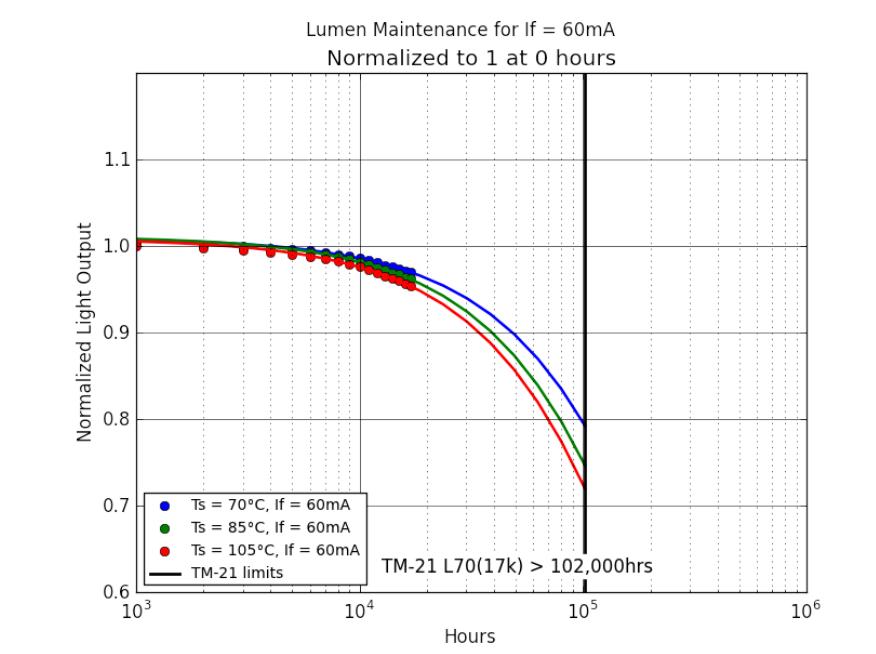
LED lifetime is different from the lifetime of traditional lamps.
An LED does not necessarily fail suddenly after a certain number of hours. Instead, its light output generally decreases gradually over time.
This is known as lumen depreciation.
Common lifetime descriptions include:
- L90 — 90% of the initial light output remains
- L80 — 80% remains
- L70 — 70% remains
For example, an L70 lifetime refers to the operating period before the LED light source is projected to decline to 70% of its initial lumen output.
Therefore:
A 100,000-hour rating does not simply mean the fixture will suddenly stop working after 100,000 hours.
It usually relates to how well the LED maintains its light output over time.
What Is LM-80?
LM-80 is a recognized method used to measure the lumen maintenance of LED light sources under controlled operating conditions.
It evaluates how LED packages, arrays, or modules perform over an extended test period at specified temperatures.
The test provides data showing how the LED light output changes over time.
LM-80 helps answer the question:
How quickly is this LED light source losing lumen output?
Typical LM-80 data includes information related to:
- Operating time
- Temperature conditions
- Lumen maintenance
- Color stability
However, LM-80 data alone does not directly represent the lifetime of the complete LED luminaire.
The thermal environment inside the actual fixture also matters.
What Is TM-21?
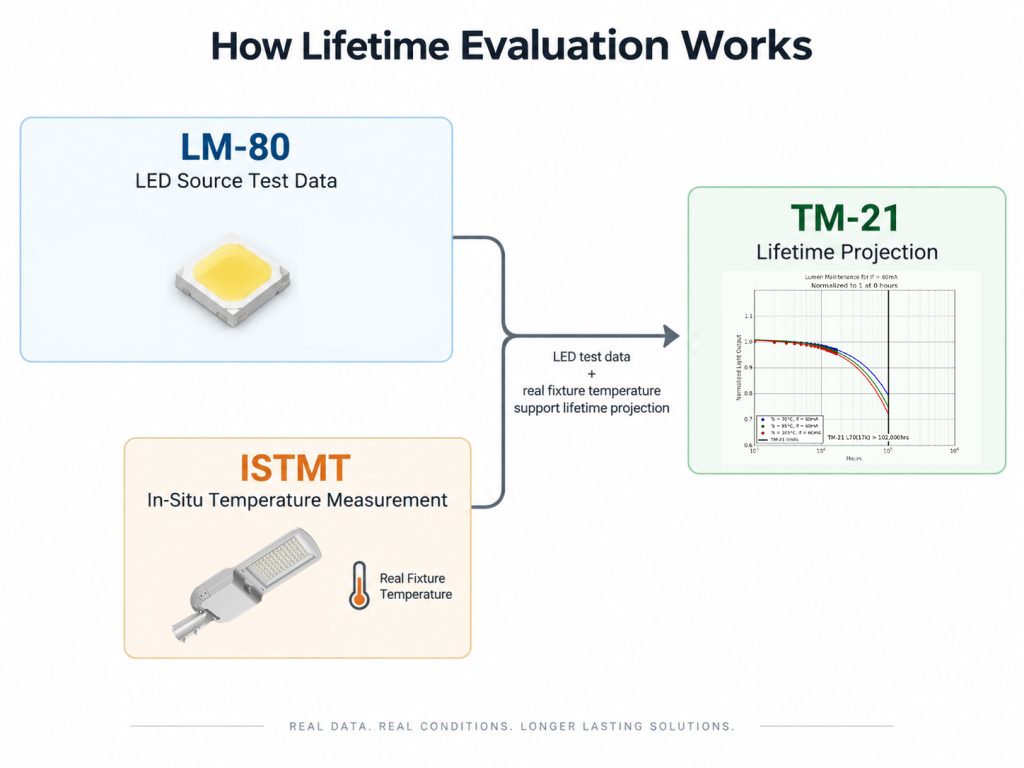
TM-21 uses LM-80 test data to estimate long-term lumen maintenance.
In simple terms:
LM-80 = measured LED performance data
TM-21 = lifetime projection based on that measured data
Instead of simply claiming:
“Our LED can last 100,000 hours.”
TM-21 provides a more structured method for estimating how the light output may change over a longer operating period.
The quality of the projection depends on the available LM-80 data and the actual operating temperature of the LED in the luminaire.
That is why another test becomes important:
ISTMT.
What Is ISTMT and Why Is It Important?
ISTMT stands for In-Situ Temperature Measurement Test.
While LM-80 evaluates the LED source under laboratory conditions, ISTMT measures the temperature of the LED when it is installed and operating inside the actual luminaire.
This helps answer a critical question:
How hot is the LED actually operating inside this fixture?
This matters because LED performance is strongly affected by temperature.
The same LED chip can perform very differently in two different luminaires.
For example:
Luminaire A
Efficient heat dissipation
Lower operating temperature
Slower lumen depreciation
Luminaire B
Poor thermal management
Higher operating temperature
Faster lumen depreciation
Therefore, the thermal design of the luminaire has a direct relationship with long-term lighting performance.
How Do LM-80, TM-21 and ISTMT Work Together?
The three should not be viewed as separate marketing certificates.
They form a logical technical process:
LM-80
↓
Provides measured lumen maintenance data for the LED source
ISTMT
↓
Determines the real operating temperature of the LED inside the luminaire
TM-21
↓
Uses the available data to project long-term lumen maintenance
Together, they provide a much stronger basis for evaluating LED lifetime than a simple number printed in a catalog.
Why Does Thermal Management Have Such a Large Impact on LED Lifetime?
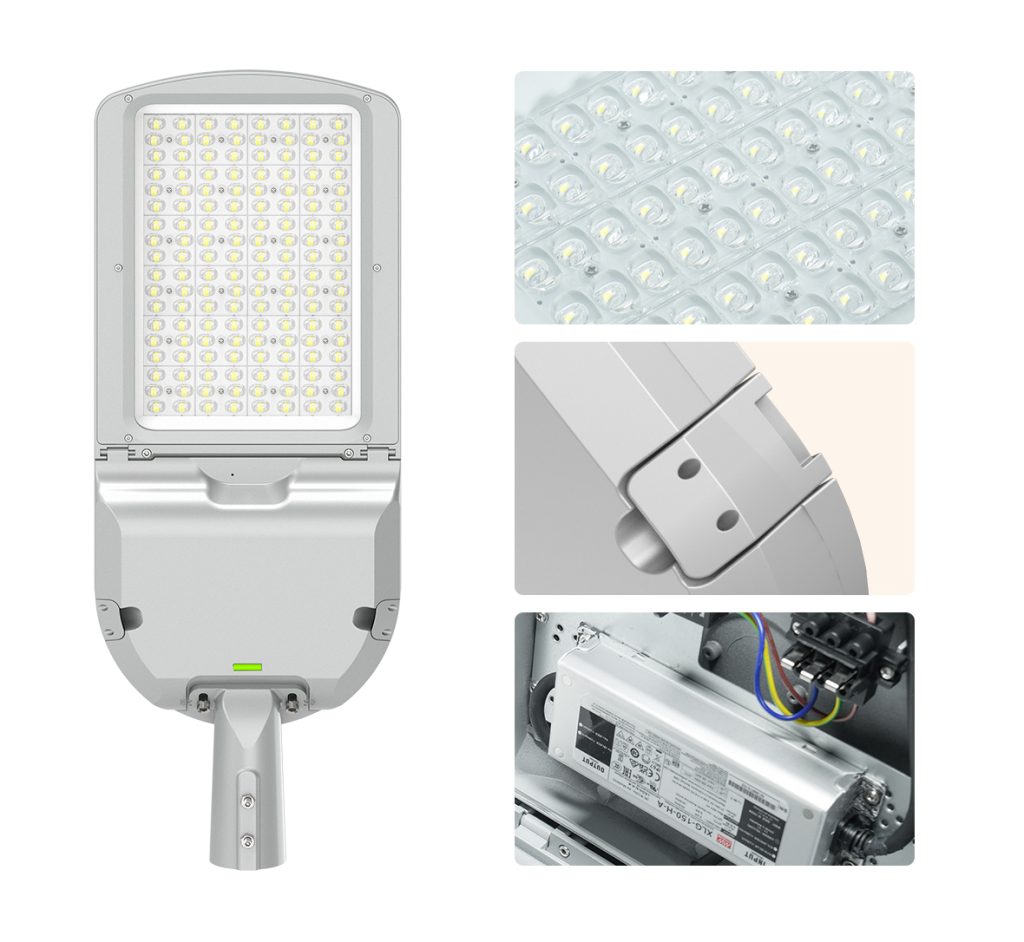
Heat is one of the most important factors affecting LED performance.
During operation, part of the electrical energy supplied to the LED is converted into heat.
If that heat cannot be effectively transferred away from the LED module, the internal temperature rises.
Long-term excessive temperature may contribute to:
- Faster lumen depreciation
- Reduced driver reliability
- Color shift
- Increased maintenance requirements
For this reason, a professional LED luminaire should consider the entire thermal path:
LED Module → PCB → Housing → Heat Dissipation
A well-designed aluminum housing, appropriate PCB structure, and effective heat dissipation system help maintain a more stable operating temperature.
MIC LED and Long-Term Lighting Reliability
For road lighting and other long-term outdoor projects, lifetime should not be evaluated from a catalog number alone.
MIC LED considers multiple factors when developing lighting solutions, including:
- LED source performance
- Thermal management
- Driver reliability
- Surge protection
- Optical design
- Environmental protection
For applicable projects, technical documents such as photometric data, thermal test information, and lifetime evaluation reports can also support engineering assessment.
This allows customers to evaluate the lighting system based on real technical conditions rather than only nominal lifetime claims.
Good Thermal Design vs. Poor Thermal Design
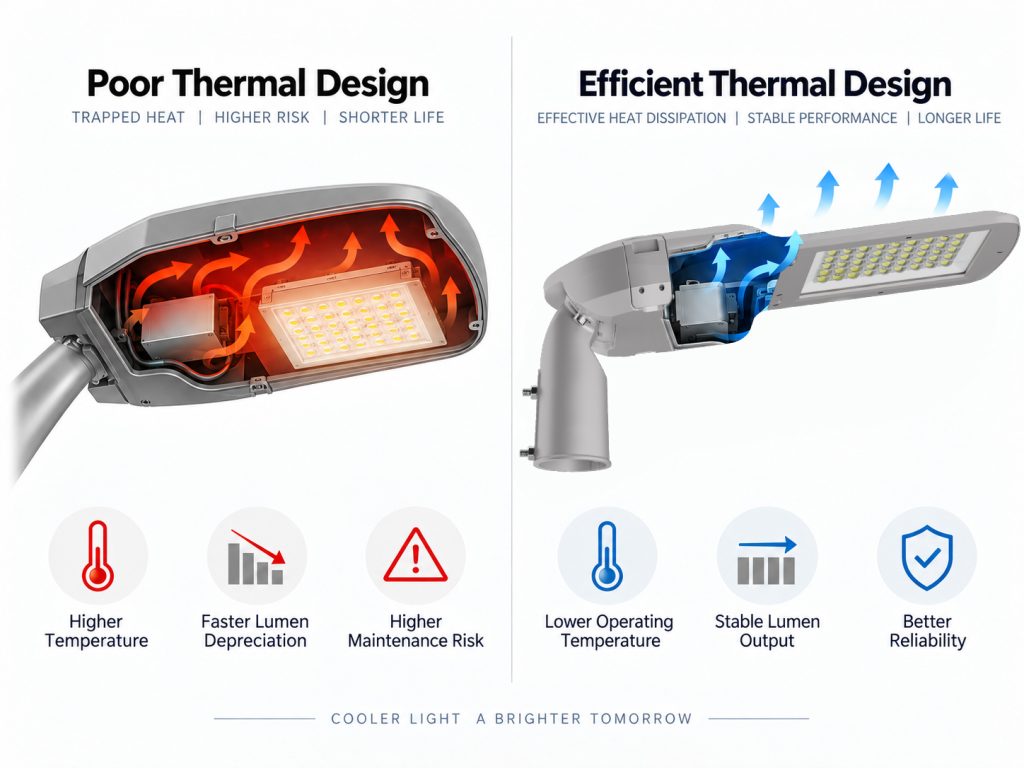
Even when two luminaires use the same LED source, their long-term performance may differ significantly.
Poor Thermal Design
- Higher internal temperature
- Faster lumen depreciation
- Greater stress on electronic components
- Higher maintenance risk
Efficient Thermal Design
- Lower operating temperature
- More stable lumen maintenance
- Better long-term reliability
- Lower maintenance requirements
This is why LED lifetime should always be considered together with luminaire thermal design.
Does LM-80 or TM-21 Prove the Lifetime of the Entire LED Fixture?
Not completely.
This distinction is important.
LM-80 primarily evaluates the LED light source, while TM-21 projects its lumen maintenance.
But a complete luminaire also contains:
- LED driver
- Wiring
- Connectors
- Optical components
- Seals
- Protection devices
Any of these components can affect the actual service life of the finished product.
Therefore, a reliable lighting project should evaluate both LED lumen maintenance and complete luminaire reliability.
What Should Buyers Check Before Accepting an LED Lifetime Claim?
For professional LED lighting projects, it is useful to ask suppliers for supporting information such as:
- LM-80 data for the LED source
- TM-21 lumen maintenance projection
- ISTMT or thermal test information where applicable
- Driver specifications
- Operating temperature range
- Surge protection
- Warranty conditions
A lifetime claim supported by technical data is far more meaningful than a simple “100,000 hours” printed on a datasheet.
About MIC LED
MIC LED provides professional outdoor and industrial LED lighting solutions for roads, ports, factories, warehouses, sports facilities, and large infrastructure projects.
Our technical support includes:
- Product selection
- Photometric files
- DIALux lighting simulation
- Thermal and reliability evaluation
- Driver configuration
- OEM / ODM customization
- Engineering project support
By combining lighting performance, thermal management, and reliable component selection, we help customers develop LED lighting systems designed for stable long-term operation.
Contact Information
📧 Email: micled@mic-led.com
🌐 Website: www.mic-led.com
💬 WhatsApp: +86 135 4334 3078