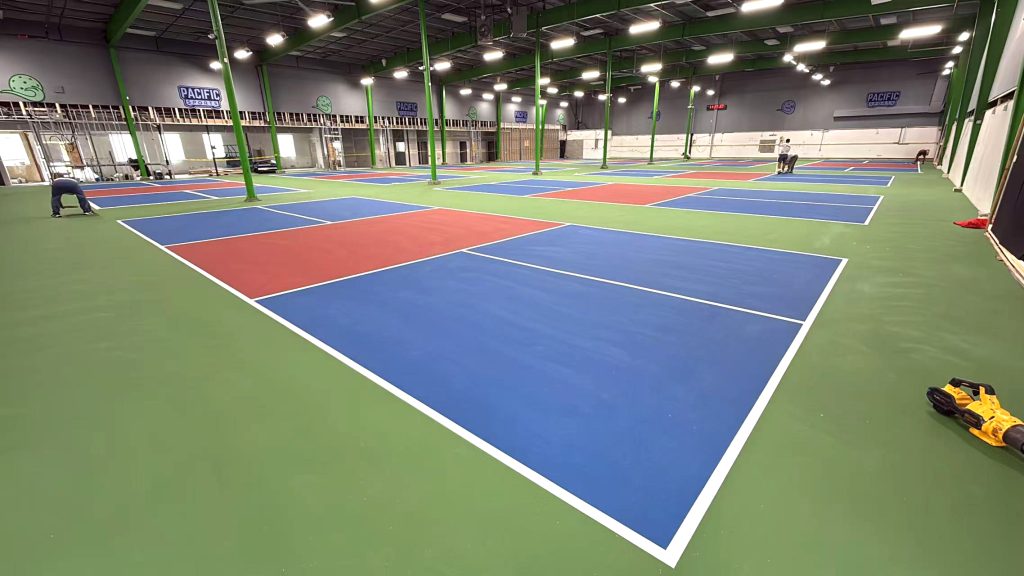
Choosing the right indoor pickleball court lighting or badminton court LED lighting involves more than selecting powerful fixtures. Proper lighting improves ball visibility, reduces glare, and creates comfortable playing conditions.
Both sports require players to track fast-moving objects and frequently look upward. Uneven illumination or excessive glare can make it difficult to follow the ball or shuttlecock.
For sports facility owners and lighting contractors, a well-designed LED lighting system should provide sufficient brightness, uniform illumination, visual comfort, and energy efficiency.
This guide explains the key factors in indoor court lighting and introduces the MIC MLL-3 LED linear sports light, designed for badminton halls, pickleball courts, and multi-purpose indoor sports facilities.
1. What Are the Lighting Requirements for Indoor Courts?
Indoor badminton and pickleball facilities require lighting that supports clear visibility throughout the playing area.
Three factors are particularly important:
- Adequate Illuminance: Players need sufficient light to see the ball, shuttlecock, and court boundaries.
- Lighting Uniformity: Consistent illumination helps avoid distracting differences between bright and dark areas.
- Glare Control: Proper optics and fixture placement reduce direct exposure to bright LED sources.
Recommended Illuminance Levels
The required lighting level depends on the facility’s intended use and applicable standards.
|
Application |
Indicative Illuminance |
|
Recreational Courts |
200–300 lux |
|
Club Training |
300–500 lux |
|
Competitive Facilities |
500–750 lux |
|
Professional Tournaments |
Project-specific requirements |
These are preliminary planning ranges rather than universal standards. Final values should be determined according to the relevant sport and project requirements.
Lighting uniformity is equally important. A court with high average illuminance but significant dark areas may still provide poor playing conditions.
Professional lighting calculations should therefore consider illuminance, uniformity, fixture distribution, and visual comfort together.
2. Why Is Anti-Glare Lighting Important for Badminton and Pickleball?
Glare is a major concern in indoor racket sports.
Badminton players frequently look toward the ceiling to follow high shuttlecock shots, while pickleball players must track fast volleys and overhead shots.
Direct exposure to bright light sources may reduce visibility and cause discomfort.
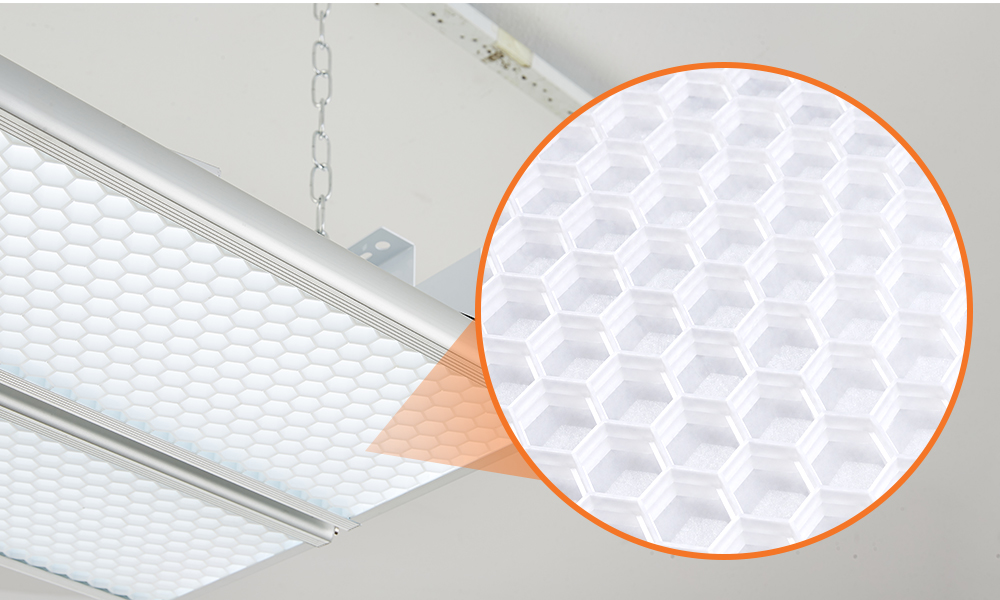
MIC MLL-3 Honeycomb Anti-Glare Optics
The MIC MLL-3 features a specialized honeycomb anti-glare optical design that helps shield the LED light source from certain viewing angles.
Its advantages include:
- Reduced direct visibility of bright LED sources
- Improved visual comfort during upward viewing
- Controlled light distribution toward the playing area
- Suitable optical characteristics for indoor sports applications
Unlike conventional general-purpose lighting, dedicated sports lighting considers both illumination and player viewing angles.
However, glare performance also depends on mounting height, fixture positioning, and the overall lighting design.
3. How to Choose the Right Mounting Height and Lighting Layout
Installation height and fixture positioning directly affect lighting performance.
Fixtures installed too low may produce excessive brightness or become more visible to players. Higher installations may provide wider coverage but require suitable optical distribution and output.
For indoor badminton and pickleball courts, contractors should consider:
- Court dimensions and ceiling height
- Fixture mounting positions
- Required lux and uniformity
- Player viewing angles
- Number of courts and surrounding areas
Example: 150W MLL-3 Installation at 6 Meters
In a Canadian indoor court lighting project, MIC supplied MLL-3 150W LED sports lights installed at approximately 6 meters.
This provides a useful reference for similar indoor sports facilities, although the final fixture quantity, spacing, and wattage must be determined according to actual project conditions.
For multi-court facilities, coordinated fixture placement can help create consistent illumination across the entire playing area.
4. MIC MLL-3 LED Linear Sports Light: Key Features
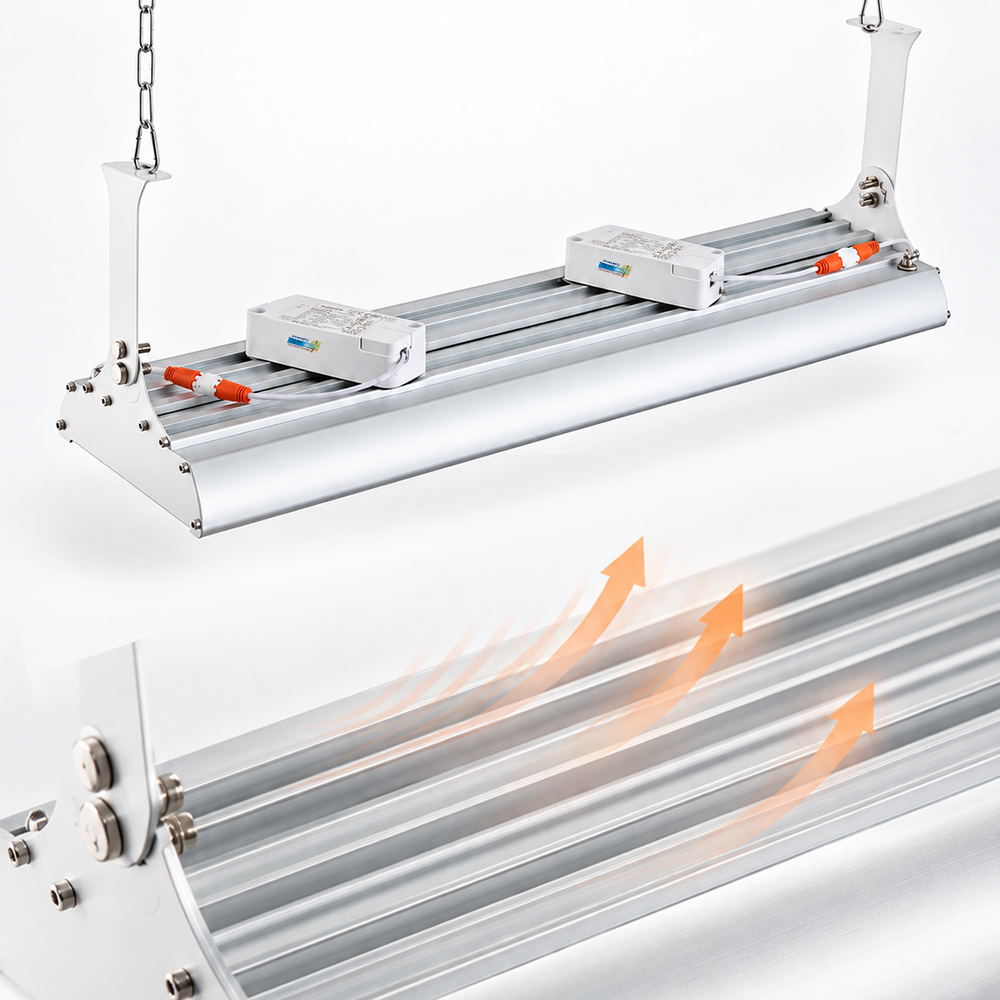
The MIC MLL-3 LED linear sports lighting series combines anti-glare optics, an aluminum housing, and flexible installation options for indoor sports applications.
Honeycomb Anti-Glare Design
The optical structure helps reduce direct brightness from certain viewing directions, supporting a more comfortable environment for badminton and pickleball players.
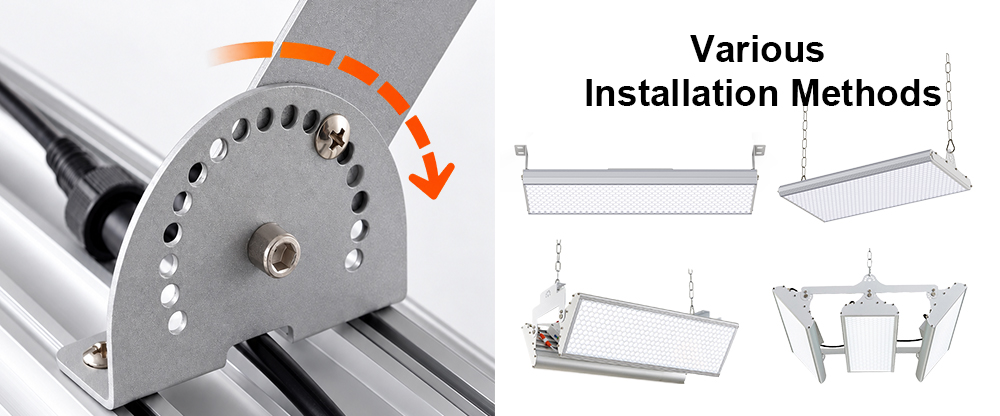
Adjustable Lighting Angle
The adjustable bracket allows contractors to adapt the luminaire orientation to the lighting layout and building structure.
Aluminum Housing and Heat Dissipation
The aluminum housing incorporates a heat-dissipation structure designed to help manage operating temperatures during extended use.
Flexible Installation Options
The MLL-3 supports different installation arrangements, including suspended mounting and bracket-based configurations, depending on the selected accessories and building structure.
Multiple Wattage Configurations
Different power options allow lighting designers to select suitable fixtures according to court size, installation height, and illumination requirements.
Typical applications include:
- Indoor badminton halls
- Pickleball clubs and sports centers
- School and university gymnasiums
- Multi-purpose indoor sports facilities
- Commercial racket-sports venues
5. Real Project Reference: MLL-3 Indoor Court Lighting in Canada
Real project experience helps contractors evaluate how a lighting product can be applied under practical installation conditions.
MIC has supplied MLL-3 LED linear sports lights for an indoor racket-sports court project in Canada.
Project Overview
|
Item |
Details |
|
Project Location |
Canada |
|
Application |
Indoor Racket-Sports Court |
|
Product Model |
MIC MLL-3 |
|
Power |
150W |
|
Mounting Height |
Approximately 6m |
|
Optical Design |
Honeycomb Anti-Glare |
This application demonstrates the use of MLL-3 fixtures in an indoor sports environment.
For similar projects, actual lighting requirements should be verified through a project-specific layout and photometric calculation.
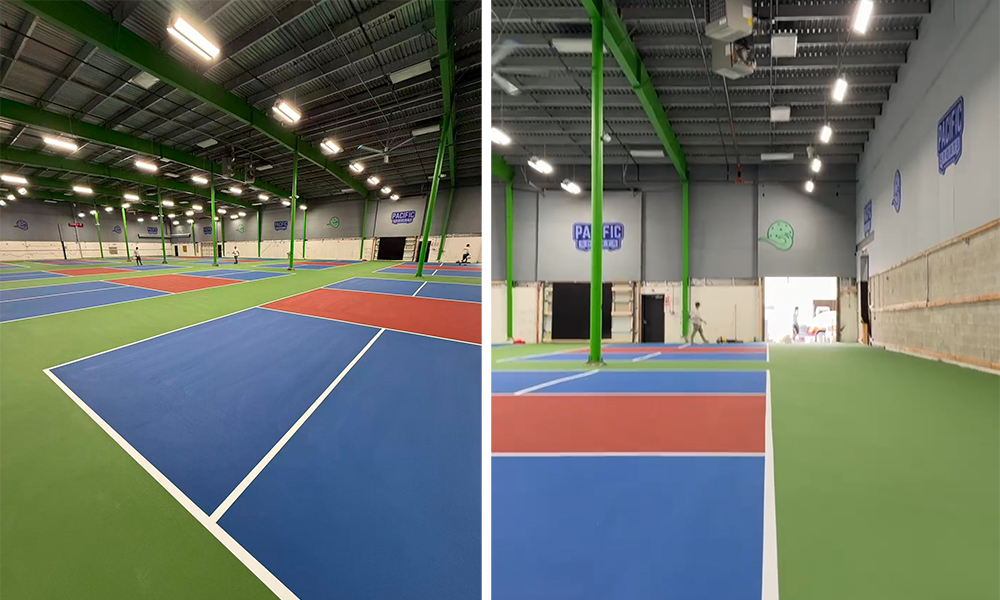
“MLL-3 150W | 6m Mounting Height | Canada”
6. Why Is Lighting Simulation Important?
Before purchasing LED lighting fixtures for an indoor sports facility, contractors should evaluate the proposed lighting arrangement.
Professional software such as DIALux can help assess:
- Average illuminance and lighting uniformity
- Fixture quantity and positioning
- Lighting distribution across the court
- Suitability of the selected optical configuration
By reviewing these factors before installation, contractors can reduce the risk of uneven illumination or unsuitable fixture placement.
At MIC OPTOELECTRONIC CO., LTD, we work with lighting distributors and project contractors to discuss product selection and project-specific lighting requirements.
7. Frequently Asked Questions
What type of LED lighting is best for indoor badminton courts?
LED sports lights with suitable anti-glare optics, uniform illumination, and flexible mounting arrangements are often a good choice. The final design should consider court dimensions and player viewing angles.
Can the same LED lights be used for badminton and pickleball?
Yes. Suitable LED sports fixtures can be used for both applications, provided the lighting layout meets the specific requirements of each facility.
Is 150W enough for an indoor badminton court?
A 150W LED fixture may be suitable as part of a court lighting system. However, the number of fixtures, mounting height, light distribution, and target illuminance determine the overall lighting performance.
How many LED lights are needed for one indoor pickleball court?
Fixture quantity depends on court dimensions, mounting height, required illuminance, and the selected luminaire’s photometric performance. A lighting calculation is recommended before finalizing the design.
8. Conclusion: Choose Lighting Quality, Not Just Wattage
Professional indoor pickleball and badminton court lighting requires a balance of illuminance, uniformity, glare control, and appropriate fixture placement.
Rather than focusing only on LED wattage, contractors should choose fixtures with suitable optics and verify the lighting layout before installation.
The MIC MLL-3 LED linear sports lighting series offers honeycomb anti-glare optics, adjustable mounting options, and an aluminum housing for indoor sports lighting applications.
Whether you are building a new badminton facility, upgrading a pickleball club, or developing a multi-court sports center, MIC can help you explore suitable LED lighting options for your project.
Looking for LED Lighting for Your Indoor Sports Court?
Send us your court dimensions, mounting height, and lighting requirements to discuss a suitable MLL-3 solution.
MIC OPTOELECTRONIC CO., LTD
Website: www.mic-led.com
Email: micled@mic-led.com
WhatsApp: +86 135 4334 3078
Professional LED Lighting Solutions for Indoor Sports Facilities.