olar street lights are becoming an increasingly popular solution for roads, residential communities, industrial parks, and remote infrastructure projects where reliable grid electricity is unavailable or costly to install.
For contractors and project buyers, selecting the right solar street light involves more than comparing LED wattage and battery capacity. Solar panel design, charging efficiency, installation conditions, and nighttime operating requirements all affect system performance.
Two common solutions are bifacial solar street lights and conventional single-sided solar street lights.
But what is the difference between them? Does a double-sided solar panel always generate more electricity? And which solution is better for your project?
In this guide, MIC OPTOELECTRONIC CO., LTD explains the main differences and introduces two solar street lighting solutions: the MIC MS-1 bifacial solar street light and the MIC MS-2 single-sided all-in-one solar street light.
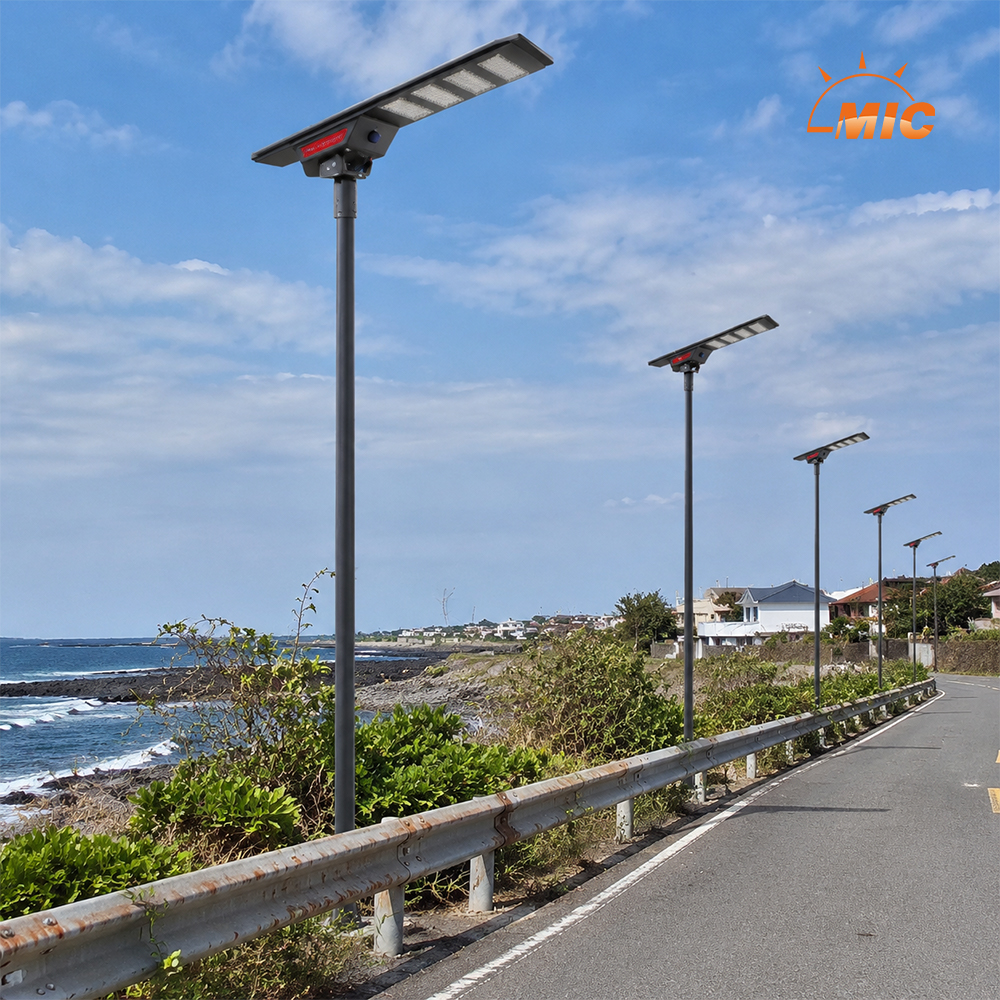
1. What Is the Difference Between Bifacial and Single-Sided Solar Street Lights?
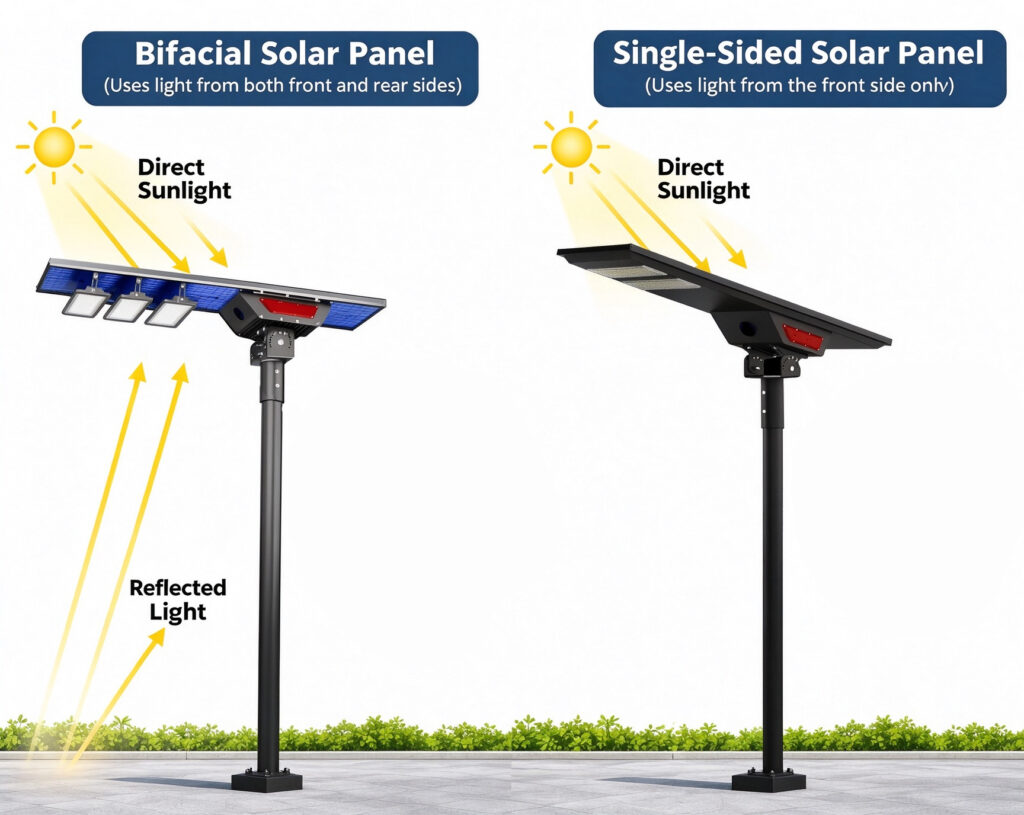
The main difference lies in how the solar panels collect sunlight.
Single-Sided Solar Street Lights
A single-sided, or monofacial, solar panel primarily collects sunlight through its front photovoltaic surface.
The panel converts solar energy into electricity, which is stored in a rechargeable battery and used to power the LED lighting system at night.
This conventional solar charging structure is widely used in outdoor lighting applications.
Bifacial Solar Street Lights
A bifacial solar panel can collect light through both its front and rear photovoltaic surfaces.
The front surface receives direct and diffuse sunlight, while the rear surface can capture additional light reflected from the ground and surrounding environment.
This design creates an opportunity to increase solar energy generation under suitable installation conditions.
The actual benefit depends on local sunlight, surface reflectivity, panel orientation, and shading.
Key Differences
|
Feature |
Bifacial Solar Street Light |
Single-Sided Solar Street Light |
|
Solar Collection |
Front and rear surfaces |
Primarily front surface |
|
Reflected Light |
Can contribute to charging |
Limited rear-side contribution |
|
Solar Panel Design |
Double-sided photovoltaic structure |
Conventional single-sided structure |
|
Installation Focus |
Both-side light exposure |
Front-side solar exposure |
|
Main Advantage |
Additional energy harvesting potential |
Straightforward solar charging design |
Both technologies can provide reliable off-grid lighting when the solar panel, battery, controller, and LED power are properly matched.
2. How Does Bifacial Solar Charging Work?
The key advantage of bifacial photovoltaic technology is its ability to utilize light reaching both sides of a solar panel.
Several environmental factors influence the additional energy captured by the rear surface.
Ground Reflectivity
Ground reflectivity, also known as albedo, describes how much sunlight a surface reflects.
Bright surfaces such as light-colored concrete, pale gravel, and certain sandy surfaces can reflect more sunlight toward the rear side of a bifacial panel than dark asphalt or vegetation.
Installation Height
The distance between the solar panel and the surrounding reflective surfaces affects the amount and distribution of light reaching the rear.
Panel Orientation
The position and orientation of the solar panel determine how sunlight reaches its photovoltaic surfaces throughout the day.
Surrounding Shading
Nearby buildings, trees, walls, and other obstacles can reduce the sunlight available to either side of the panel.
These factors explain why bifacial technology should be evaluated according to the project environment rather than a fixed energy-generation percentage.
3. Which Solar Street Light Is Better for Different Locations?
Different outdoor environments create different opportunities for solar charging.
Desert Roads and Open Areas
Desert regions often have strong solar resources and relatively open installation environments.
Bifacial solar street lights can be attractive for these projects, particularly where the ground provides useful reflected sunlight and both panel surfaces remain exposed.
However, desert conditions also require consideration of dust accumulation, extreme temperatures, and maintenance accessibility.
Residential Communities
For residential streets, housing developments, and pedestrian areas, both technologies can be effective.
Single-sided systems may provide a straightforward solution where the front solar panel receives sufficient sunlight to meet the required nightly energy demand.
Industrial Parks and Commercial Developments
Industrial parks and commercial properties may include open roads, parking areas, and light-colored paved surfaces.
Bifacial technology can be considered where the installation layout supports additional rear-side solar collection.
Rural and Remote Roads
For remote roads without electrical infrastructure, the priority is dependable nighttime operation.
The best solution is the one that delivers sufficient daily solar energy and battery storage under local environmental conditions.
A well-sized single-sided system can outperform a poorly configured bifacial system, making complete system design more important than panel type alone.
4. MIC MS-1 Bifacial Solar Street Light
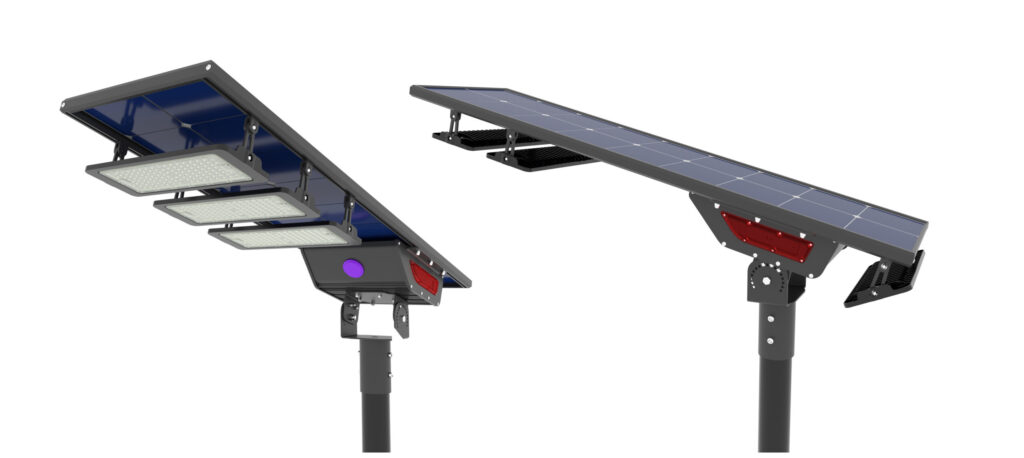
The MIC MS-1 series features an integrated bifacial solar charging design developed for outdoor road lighting applications.
Its double-sided photovoltaic structure allows the solar panel to utilize sunlight from both sides, offering additional charging potential in suitable environments.
The series is available with different LED module configurations to accommodate various lighting requirements.
Key Features
- Bifacial Solar Charging: The double-sided photovoltaic structure can utilize additional reflected sunlight.
- Integrated Solar Lighting System: Combines solar energy collection, battery storage, and LED lighting in an integrated product design.
- Multiple LED Module Configurations: Available in one-, two-, three-, and four-module designs.
- Flexible Project Applications: Suitable for roads, commercial developments, open outdoor spaces, and off-grid lighting projects.
- Project-Oriented Selection: Different configurations allow contractors to select products according to road dimensions and lighting requirements.
For applications with strong solar resources and favorable rear-side light exposure, the MS-1 provides an alternative to conventional single-sided solar street lighting.
5. MIC MS-2 Single-Sided All-in-One Solar Street Light
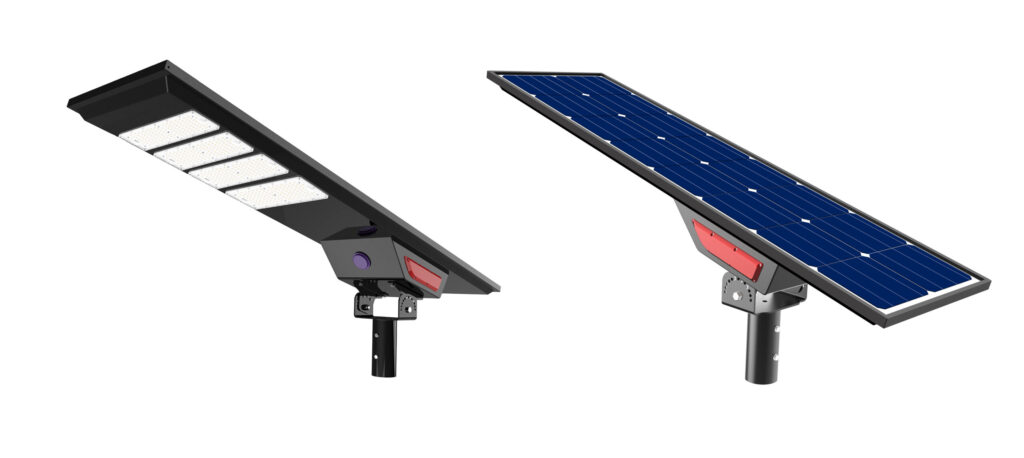
The MIC MS-2 series is an integrated single-sided solar street light designed for outdoor illumination.
The solar panel, LiFePO4 battery, PHOCOS MPPT controller, and LED lighting modules are integrated into one system.
Key Product Specifications
|
Specification |
MIC MS-2 Series |
|
Solar Panel |
Single-Sided |
|
LED Power Range |
40W-150W |
|
LED Luminous Efficacy |
180 lm/W |
|
Luminous Flux |
7,200–27,000 lm |
|
Battery Technology |
LiFePO4 |
|
Solar Charge Controller |
PHOCOS MPPT |
|
IP Rating |
IP66 |
|
System Structure |
All-in-One Integrated Design |
Key Features
High-Efficiency LED Lighting
With LED luminous efficacy of 180 lm/W, the MS-2 series delivers high luminous output while managing lighting power consumption.
PHOCOS MPPT Solar Charging
The integrated PHOCOS MPPT controller manages solar charging to support efficient energy collection and battery operation.
LiFePO4 Battery Storage
The battery stores electricity generated during daylight hours to power the LED light at night.
IP66 Outdoor Protection
IP66 protection supports operation in outdoor environments exposed to dust and rain.
Integrated Product Design
The all-in-one structure combines key lighting and solar components into a compact fixture, making it practical for road and outdoor lighting installations.
The MS-2 series is an effective option for projects seeking a high-efficiency LED lighting system with conventional single-sided solar charging.
6. Solar Panel Capacity and Battery Storage: What Matters Most?
Solar panel technology is only one part of an effective off-grid street lighting system.
Battery capacity, LED power consumption, and the lighting control schedule are equally important.
When evaluating a solar street light, buyers should consider:
- Daily Solar Energy Generation: How much electricity the photovoltaic panel can collect under local conditions.
- Battery Storage Capacity: How much usable energy can be stored for nighttime operation.
- Nighttime Lighting Schedule: Whether the light operates at full brightness or follows a programmed dimming schedule.
- Rainy-Day Autonomy: How long the system can operate during periods of reduced solar charging.
- Charging Controller Performance: How effectively solar energy is managed and stored.
For example, a street light operating at reduced brightness during low-traffic hours may consume less energy than a fixture running continuously at full power.
This can help extend operating time without sacrificing the lighting needed during peak activity periods.
For long-term projects, matching energy generation, battery storage, and lighting demand is essential to achieving reliable performance.
7. Real-World Application: MIC Bifacial Solar Street Lighting in the UAE
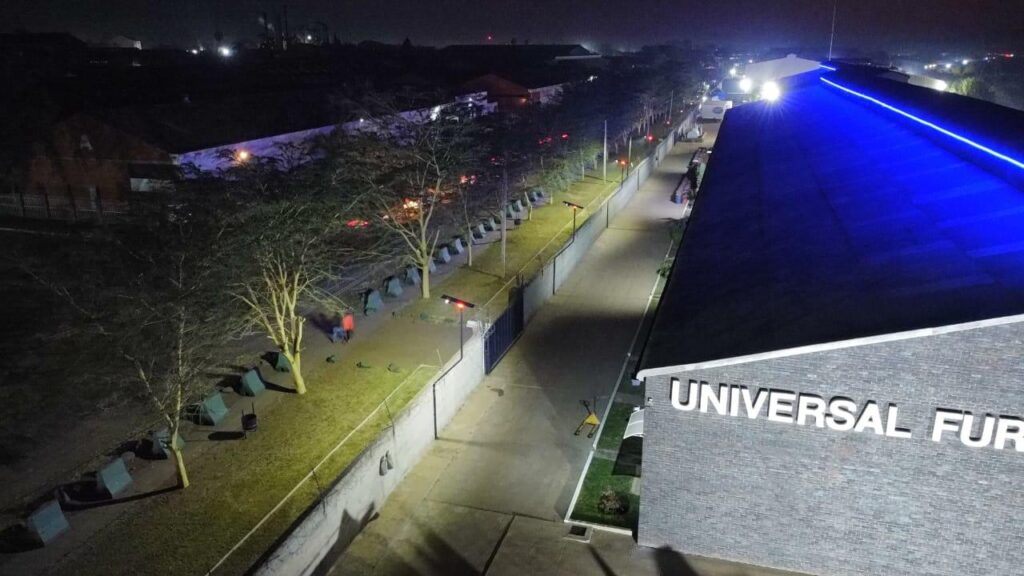
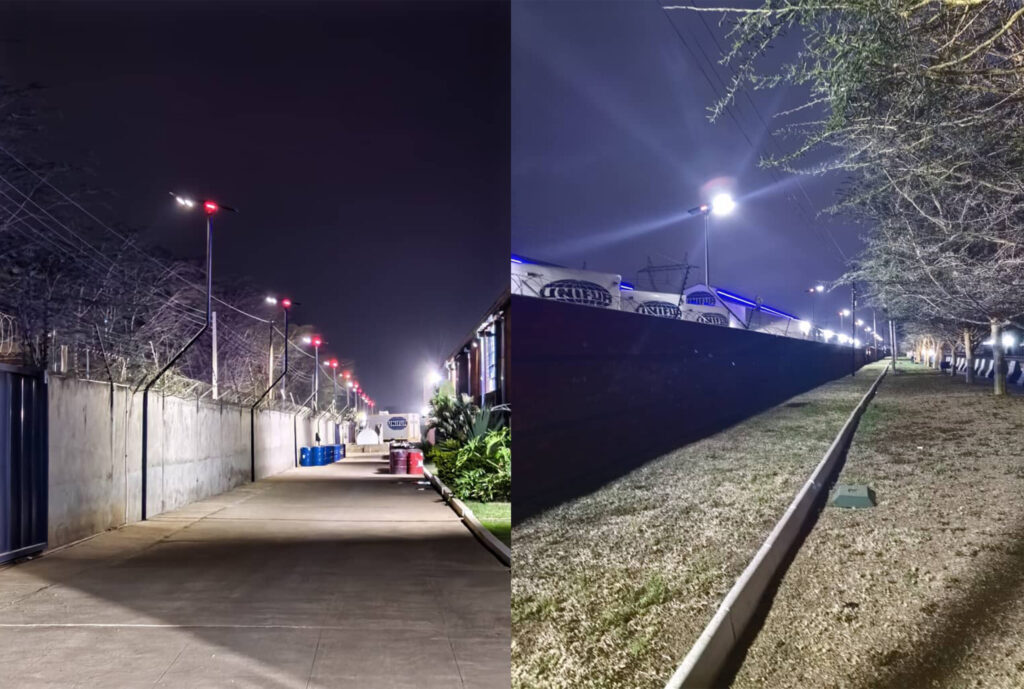
MIC has project experience with bifacial solar street lighting in the United Arab Emirates, including the Anavrin Equestrian Retreat in Ras Al Khaimah.
The project demonstrates the application of double-sided solar street lighting technology in an outdoor environment with substantial solar resources.
Such installations highlight the importance of selecting solar lighting solutions according to the local environment, available sunlight, and project layout.
For contractors planning similar developments, the project offers a practical reference for integrating solar-powered lighting into outdoor infrastructure.
8. Frequently Asked Questions
Are bifacial solar street lights always better than single-sided models?
Not necessarily. Bifacial panels can collect additional reflected light, but the benefit depends on the installation environment. A properly designed single-sided system can also deliver excellent nighttime performance.
Do bifacial solar panels work in desert environments?
Yes. Bifacial photovoltaic technology can be suitable for desert environments with strong sunlight and useful surface reflection. Panel orientation, dust, shading, and the actual reflectivity of the ground should be considered during system selection.
Which is more important: solar panel efficiency or battery capacity?
Both are important. Solar panels generate electricity, while batteries store the energy required at night. The complete system must be sized according to the daily lighting demand.
Can solar street lights operate during cloudy or rainy weather?
Yes. Solar street lights use stored battery energy for nighttime operation. The duration depends on available battery capacity, previous solar charging, lighting power consumption, and the programmed operating schedule.
Which MIC solar street light should I choose?
The MS-1 series is worth considering where double-sided photovoltaic charging offers useful additional energy collection. The MS-2 series provides an integrated single-sided solution with high-efficiency LED lighting and PHOCOS MPPT charging technology.
Conclusion: Choose the Right Solar Street Light for Your Project
Both bifacial and single-sided solar street lights offer practical solutions for outdoor lighting without conventional grid connections.
The main difference is how the photovoltaic system collects solar energy.
Bifacial solar street lights can utilize light from both sides of the panel, providing additional energy-harvesting potential under suitable environmental conditions.
Single-sided solar street lights offer a straightforward photovoltaic structure that can effectively meet outdoor lighting needs when properly designed.
The MIC MS-1 and MS-2 series provide different solutions for international solar street lighting projects.
For contractors, distributors, and infrastructure developers, the best choice depends on the installation environment, solar resources, battery requirements, and desired nighttime lighting performance.
Looking for Solar Street Lighting Solutions?
MIC OPTOELECTRONIC CO., LTD supplies solar LED street lighting solutions for international road, commercial, and infrastructure projects.
Share your project location, road dimensions, required lighting power, installation height, and operating schedule with our team to discuss suitable solar street light configurations.
MIC OPTOELECTRONIC CO., LTD
Website: www.mic-led.com
Email: micled@mic-led.com
WhatsApp: +86 135 4334 3078
Professional Solar LED Lighting Solutions for Global Infrastructure Projects.