Module light Introduction
Shenzhen MIC Optoelectronics Co., Ltd. was founded in 2005 and is located in Longgang District, Shenzhen, Guangdong. Since the LED company is among the leader in the industry, thus it specializes in high-power LED indoor and outdoor lighting including LED Module Light. It is a leading integrated operation service company in the field of LED optoelectronics, focusing on the research and development of LED lighting products, Production, and sales. The company also has standard product production lines, self-support import and export rights, and professional management.
Also, they have research and development, manufacturing, and marketing teams, with more than hundreds of employees. They manufacturer different Products such as high-power LED street lights, LED solar street lights, LED high bay lights, LED tunnel lights, LED tubes, LED bulbs, LED spotlights, LED track lights, LED engineering lights LED ceiling lights and other high-power LED indoor and outdoor lighting fixtures and LED solar products, which have the advantages of energy-saving, environmental protection, and long service life, are widely used in lighting, traffic indication and urban lighting and other fields.
The company has also passed ISO9001 international quality system certification and ISO14001 international environmental management system certification. It has UL, TUV, CE, ROHS, FCC, and other international testing and certification reports for various products.
Survive by quality, and develop by innovation. Shenzhen Chuangqi Optoelectronics insists on technological innovation for development, adhering to the tenet of "Serving customers wholeheartedly", providing customers with high-quality products and perfect after-sales service. Therefore, the company is willing to cooperate with new and old customers and develop together sincerely.
Applicable places:
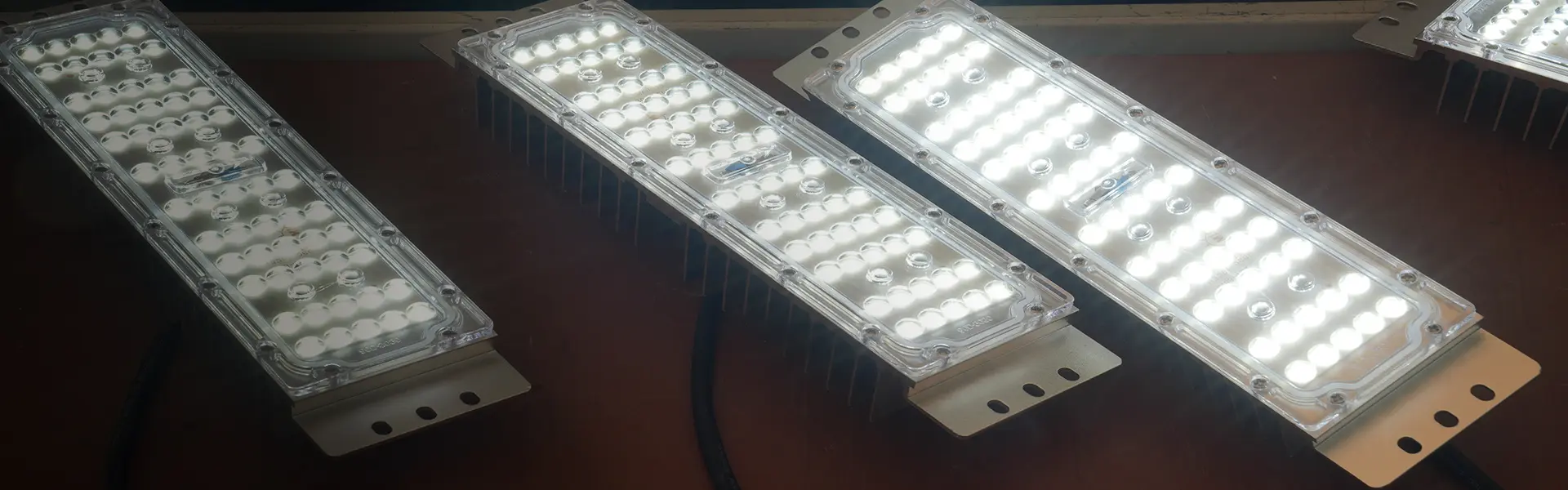
Module light is mainly used for replacement in new LED lamps with modular design.
| ARTÍCULO No. | ML-30 | ML-50 | ML-60 |
| Fuerza | 30w | 50w | 60w |
| Flujo Luminoso | >3900lm | >6500lm | >7800lm |
| Peso neto/tamaño (kg, mm) | 1kg/W300*L72*H33mm | 1kg/W300*L72*H33mm | 1.1kg/W300*L72*H33mm |
| Carton size(20pcs/ctn) | 530*325*185MM | 530 * 325*185MM | 530*325*185MM |
| Voltaje de entrada | 85-305V AC | Grado IP | IP66 |
| Ángulo de haz | 20°,60°, 90°,120° & 150°*80° | CCT | 2700k-6500k |
| Flujo luminoso | 130 lm/s | CRI | > 80 |
| Esperanza de vida | 50000h | Garantizar | 3 años |
Características del producto:
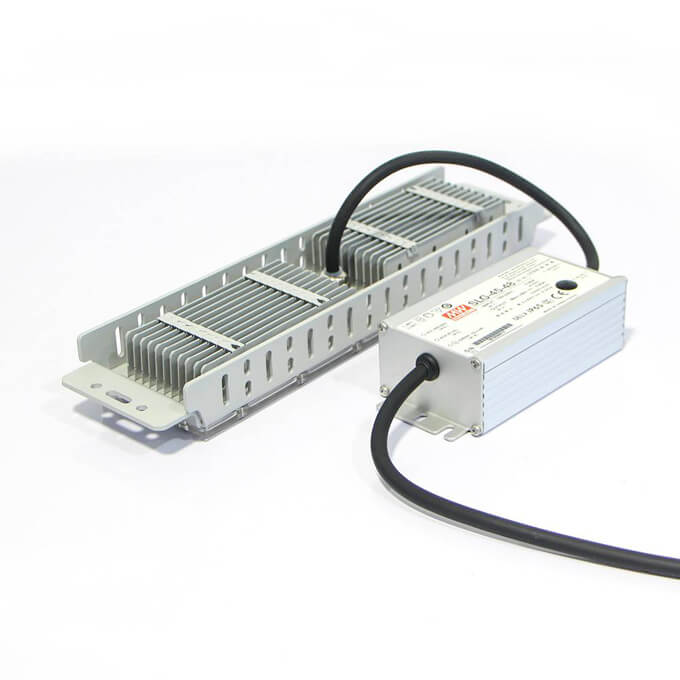
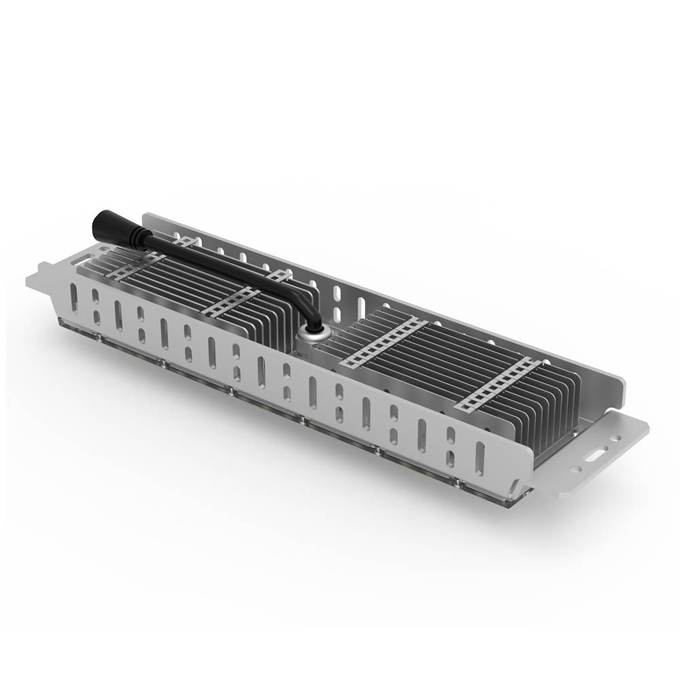
1: Module series floodlight housing adopts one-piece die-cast aluminum heat dissipation, the main body is square, the power supply is inside the lamp body, the lamp beads and the main body bracket are composed, the whole is very light and thin.
2: Shell structure: Due to the use of die-casting process, the entire lamp does not have too many joints, plus a waterproof sealing ring, the waterproof level of the lamp is IP65.
3: Functional characteristics: Our module series flood light is a lamp dedicated to the replacement of modular design lamps.
Comparison of LED module lights and traditional street lights (high pressure sodium lights)
*The energy consumption of LED module lights and the energy consumption of LED street lights are the same at the same power. The following quotes the energy consumption comparison data of LED street lights.
Con el uso generalizado de LED de alta potencia en la decoración y la iluminación, los controladores LED de potencia se están volviendo cada vez más importantes. Será posible utilizar iluminación LED de alta potencia para la iluminación de carreteras. La iluminación viaria es la lámpara con mayor tiempo de uso y mayor consumo energético. El uso de lámparas LED en las farolas reducirá en gran medida la escasez de electricidad en las ciudades y ahorrará energía a nivel nacional. Hay muchos fabricantes nacionales de farolas LED y el rendimiento de sus productos varía mucho. Aquí solo tomemos como ejemplo la farola LED producida por nuestra empresa. Compare con la farola tradicional (lámpara de sodio de alta presión).
A continuación comentaremos el rendimiento y economía de las farolas LED y las farolas tradicionales.
Comparison of performance comparison
Comparison of service life The traditional high-pressure sodium lamps with flood light sources currently circulating in the market have a shorter lifespan due to quality and technical problems, generally less than 6000 hours. The LED street lamp of Hangzhou Zhonggang Digital Technology Co., Ltd. The service life is more than 50,000 hours, which is equivalent to more than 8 times the life of the best high-pressure sodium lamps in circulation today.
That is to say, the high-pressure sodium lamp is replaced more than 8 times. On the contrary, you will have to replace the LED flood light only once. Thus, the cost of replacing the light source will not survive. The maintenance cost and the many inconveniences caused by it are the most obvious contrast. (Because of the special purpose of the street lamp, it is difficult to replace, it takes a certain amount of manpower and machine resources to complete the operation). LED flood light has no effect on the number of switches, no However, the high-pressure sodium lamp has a certain limit on the number of switching times.
Generally, it can only be switched on and off for 4000 to 5000 times, and the service life is over. The LED street lamp can be switched on and off for any number of times and at the end of its service life. There is no blackening phenomenon. The high-pressure sodium lamp is switched on and off for 1000 times or after 1000 hours of use, the lamp tube is obviously black, and the light efficiency is reduced by 16%. Our company adopts imported luminous body packaged by Nichia chip in Japan, and the quality is undoubtedly the top product on the market.
Comparison of start-up performance.
The LED flood light starts instantly, while it takes more than 10 minutes for the high-pressure sodium lamp to start to reach normal brightness. During this time, the high-pressure sodium lamp consumes a lot of power, while the LED flood light consumes normal power. Through the control circuit (such as Hangzhou Zhonggang Digital), the input voltage of the LED flood light can be between 90 volts and 265 volts without affecting the LED lights. The high-pressure sodium lamp cannot start when the input voltage is less than 185V, and the power increases by 12% when the input voltage exceeds 245V.
In this way, high-pressure sodium lamps have higher requirements for power supply lines. The LED has no effect.
Comparison of color rendering
The color rendering of high-pressure sodium lamps can only reach 20-30, while LED floodlights can reach more than 85. Compared with traditional lighting fixtures, the driver can better identify obstacles in the road and the surrounding environment of the road, and reduce the occurrence of traffic accidents. Also, the level of color rendering directly reflects the scotopic difference (S/P) of human eyes to light.
Therefore, the luminous flux emitted by the high pressure sodium lamp must be multiplied by a correction value (0.64) to be the light perceived by the human eye strength. The luminous flux emitted by the LED lamp must be multiplied by a correction value (1.60) to be the intensity perceived by the human eye.
Color temperature range
The color temperature range of high-pressure sodium lamps is 2000 to 2500, while the color temperature range of LED street lamps is 2700k to 9000k. If the color temperature is low, it gives people a warm feeling in winter, but it gives people a hot feeling in summer.
If the color temperature is high, it will feel cold in winter and cool in summer. Generally, people spend more time in the evening in summer, but less time in the evening in winter, and there are more hot weather than cold weather in the year. Therefore, it is better to use white light with a high color temperature for road lighting.
Luminous decay
The luminous decay of LED floodlights has a lot to do with the radiators of LED lamps. Some manufacturers do better. For example, our company adopts the technology of "Multilayer Compound Heat Dissipation System" independently developed and obtained the national invention patent. The radiator is independently developed and molded, and the developed radiator makes it fit well with the lamp piece to achieve the best heat dissipation effect.
According to the current data, its light decay is less than 3% in 10,000 hours! In general, the light decay of the high-pressure sodium lamp is more than 25% in 2000 hours.
Comparison of lamp efficiency
The power efficiency of our company's LED floodlights can reach 88%, while the efficiency of high-pressure sodium lamps can only reach 70%. For example, the entire lamp power consumption of a 120 watt LED flood light is 138 watts, while the entire lamp power consumption of a 120 watt high pressure sodium lamp is 156 watts.
Comparison of environmental protection
LED flood light does not contain mercury, no ultraviolet radiation, and its low working temperature effectively reduces heat emission. Because it saves electricity, it saves coal for power generation and uses less coal for power generation, thereby saving carbon dioxide emissions! The high-pressure sodium lamp contains mercury and ultraviolet radiation, so it emits a lot of heat, consumes electricity, wastes coal, and emits a lot of carbon dioxide!
The LED power factor is greater than 0.99, and the power factor of the high-pressure sodium lamp is about 0.44. So, in this way, the LED pollutes the power grid very little, while the high-pressure sodium lamp pollutes the power grid very much! LED lamps have no stroboscopic and light pollution, while high-pressure sodium lamps have obvious stroboscopic and light pollution.
Effective light utilization rate
Due to the characteristics of LED light source similar to point light source, it emits directional light to the illuminated object. There is basically no waste of light, so it has a very high light utilization rate, which can reach more than 92%. However, because the high-pressure sodium lamp emits on all sides, part of the light is blocked by the light source itself and has a large luminous point.
It is difficult to make optical design, and the efficiency of the lamp is not high, and the output The light spot will not reconcile with the required effective irradiation surface and waste part of the light source. Therefore, it is projected to the surface of the illuminated object through the reflector of the lamp, and part of the light will be lost in the middle. Therefore, the effective light utilization rate of traditional lamps is 55~60%
Energy-saving comparison
MIC LED Flood light VS HPS Lamp ROI Analysis (Direct Replacement)
| Light Source Item | HPS Lamp | MIC S series LED Flood Light | ||
| Initial Investment | Power of Light Source | 500W | 150W | |
| QTY | 20pcs | 20pcs | ||
| Electric power consumption | Power of Light Source | 500W | 150W | |
| Distributor | Ballast | Conductor | ||
| 150W | 17W | |||
| Line Loss(2%) | 25W | 8W | ||
| Transformer Loss(1%) | 15W | 5W | ||
| Reactive Compensation | PF 0.80 | PF 0.95 | ||
| Power of Each Lamp | 863W | 188W | ||
| QTY |
20pcs 17.3kw |
20pcs | ||
| Total Power of Lamps | 207 kwh | 3.8kw | ||
| Daily Power Consumption | 75,555 kwh | 45.14 kwh | ||
| Yearly Power Consumption | 755,550 kwh | 16475kwh | ||
| 10 years’ Power Consumption | 500W | 164749 kwh | ||
Detalles de producto:
Ventaja
-
- Sus propias características: luz unidireccional, sin difusión de luz, lo que garantiza la eficiencia de la luz.
- La farola LED tiene un diseño óptico secundario único, que irradia la luz de la farola LED al área que necesita ser iluminada y mejora aún más la eficiencia de la iluminación para lograr el propósito de ahorrar energía.
- The LED has reached 130-170lm/W, and there is still a lot of room for development, with a theoretical value of 360lm/W. The luminous efficiency of high-pressure sodium lamps increases with the increase of power. Therefore, the overall luminous efficiency of LED street lamps is stronger than that of high-pressure sodium lamps;
- La reproducción cromática de la luz de las farolas LED es mucho mayor que la de las lámparas de sodio de alta presión. El índice de reproducción cromática de las lámparas de sodio de alta presión es de solo 23, mientras que el índice de reproducción cromática de las farolas LED es superior a 75. Desde la perspectiva de la psicología visual, se puede lograr el mismo brillo. Es más del 20% más baja que la lámpara de sodio de alta presión.
- La caída de la luz es pequeña, la caída de la luz en un año es inferior al 3% y aún cumple con los requisitos de la carretera después de 10 años de uso, mientras que la lámpara de sodio de alta presión tiene una gran caída, que se ha reducido en más de 30 años. % en aproximadamente un año. Por lo tanto, el diseño de la potencia de la farola LED puede ser más bajo que las lámparas de sodio de alta presión.
- La farola LED tiene un dispositivo de ahorro de energía de control automático, que puede lograr la mayor reducción posible de energía y ahorro de energía bajo la condición de cumplir con los requisitos de iluminación en diferentes momentos. Puede realizar atenuación por computadora, control de período de tiempo, control de luz, control de temperatura, inspección automática y otras funciones humanizadas.
Ventajas adicionales
- Larga vida: se puede utilizar durante más de 50.000 horas y proporciona una garantía de calidad de tres años. La desventaja es que no se puede garantizar la vida útil de la fuente de alimentación.
- Alta eficiencia luminosa: con chips ≥100LM, puede ahorrar más del 75% de energía en comparación con las lámparas de sodio de alta presión tradicionales.
- Fácil instalación: no es necesario agregar cables enterrados, sin rectificadores, etc., conecte directamente al poste de la lámpara o coloque la fuente de luz en la carcasa de la lámpara original.
- Excelente control de disipación de calor: la temperatura en verano se controla por debajo de 45 grados, y se adopta la disipación de calor pasiva, y la disipación de calor en verano es insuficiente.
- Calidad confiable: todas las fuentes de alimentación del circuito utilizan componentes de alta calidad, y cada LED tiene protección individual contra sobrecorriente, por lo que no hay necesidad de preocuparse por daños.
- Color de luz uniforme: no se agregan lentes y no se sacrifica el color de luz uniforme para mejorar el brillo, a fin de garantizar un color de luz uniforme sin apertura.
- El LED no contiene mercurio metálico nocivo y no dañará el medio ambiente cuando se deseche.
Combining the above principles, the energy saving effect is remarkable, and it can save more than 60% of electricity instead of high pressure sodium lamps.
Bajo costo de mantenimiento: en comparación con las farolas tradicionales, el costo de mantenimiento de las farolas LED es extremadamente bajo. Después de la comparación, todos los costos de los insumos se pueden recuperar en menos de 6 años.
Desventaja
- Un solo LED tiene poca potencia. Para obtener alta potencia, se requieren múltiples conexiones en paralelo.
- Baja reproducción cromática. El color que se muestra bajo la iluminación LED no es tan verdadero como el de una lámpara incandescente. Esto debe analizarse a partir de la distribución espectral, que es un problema técnico.
- Punto de luz. Debido a los defectos en el proceso de fabricación del propio LED blanco y al error de coincidencia con la copa o lente reflectante, es fácil causar el problema del "círculo amarillo".
- LED illumination uniformity problem. If the secondary optical design is not carried out, the illumination of the LED is relatively concentrated, so the secondary optical design must be carried out to make the light intensity distribution map look like a bat.
- The light decay of LED. Compared with low-power LEDs, high-power LED street lights have much better light decay. However, low-power LEDs emit very little heat. The high-power LED has a problem that cannot be solved by heat dissipation, and the brightness will be significantly reduced after heating, so the power cannot be increased.
Requisito de habilidades:
La tecnología es cada vez más madura y la eficiencia de la fuente de luz ha alcanzado más de 100 lm/W, lo que hace posible la transformación del alumbrado público urbano con ahorro de energía. Las farolas LED, especialmente las farolas LED de alta potencia, están impactando el mercado de farolas tradicionales a un ritmo rápido.
Como su nombre lo indica, las farolas LED de alta potencia son farolas con una potencia superior a 30 vatios y que utilizan un nuevo tipo de fuente de luz LED semiconductora. La norma es generalmente la uniformidad de la iluminancia de la vía, en consonancia con la iluminancia de la vía. (La mitad del punto central real alcanza los 25 LUX, la intensidad de la luz central de 1/4 alcanza los 15 LUX, la intensidad de luz más baja a 16 metros es 4 LUX y la intensidad de la luz superpuesta es de aproximadamente 6 LUX. Se refiere a la farola LED que utiliza paneles solares de silicio como fuente de alimentación.
Standard
- La tasa de conversión de la luz es del 17% (la energía solar por metro cuadrado es de 1000W y la eficiencia de utilización real es de 170W)
- El material de la lente de las farolas en el mercado es un material óptico mejorado, con una transmitancia de ≥93%, una resistencia a la temperatura de -38 a +90 grados y una tasa de anti-UV y amarilleamiento de 30.000 horas sin cambios.
- Farola LED, utilizada principalmente para la lente de farola LED, el punto es rectangular, el material es material óptico PMMA, la transmitancia es ≥93%, la resistencia a la temperatura es -38-+90 grados y la tasa de amarillamiento anti-UV se mantiene sin cambios durante 30,000 horas. Esperar,
- La iluminancia promedio de la uniformidad de la iluminancia de la superficie de la carretera es 0,48 y la relación puntual es 1:2.
- Conozca la iluminación de la carretera. (El punto central real de 1/2 alcanza 25 LUX, la intensidad de luz central de 1/4 alcanza 15 LUX, la intensidad de luz más baja a 16 metros de distancia es 4 LUX y la intensidad de luz superpuesta es de aproximadamente 6 LUX.
- Tiene muy buenas perspectivas de aplicación en nuevo alumbrado urbano. La profundidad de atenuación, el color y otras características no cambiarán debido a la atenuación.
- Adaptarse a la humedad: ≤95.
A pesar del rápido desarrollo de las farolas LED, el estándar de las farolas LED está relativamente rezagado. A nivel mundial, no existen todos los estándares sobre farolas LED, como los estándares europeos para farolas LED. De hecho, los estándares para las farolas LED en varias regiones no son los mismos en términos de indicadores. Las farolas LED deben cumplir con los requisitos del área de ventas en términos de estándares. Por lo tanto, licitar para proyectos de farolas LED requiere un estudio en profundidad de los estándares locales de farolas LED. Sólo así será feroz. Ocupar un lugar en la competencia del mercado.