LED Flood Light vs Metal Halide Flood Light: Which Is Better for Stadium and Airport Lighting?
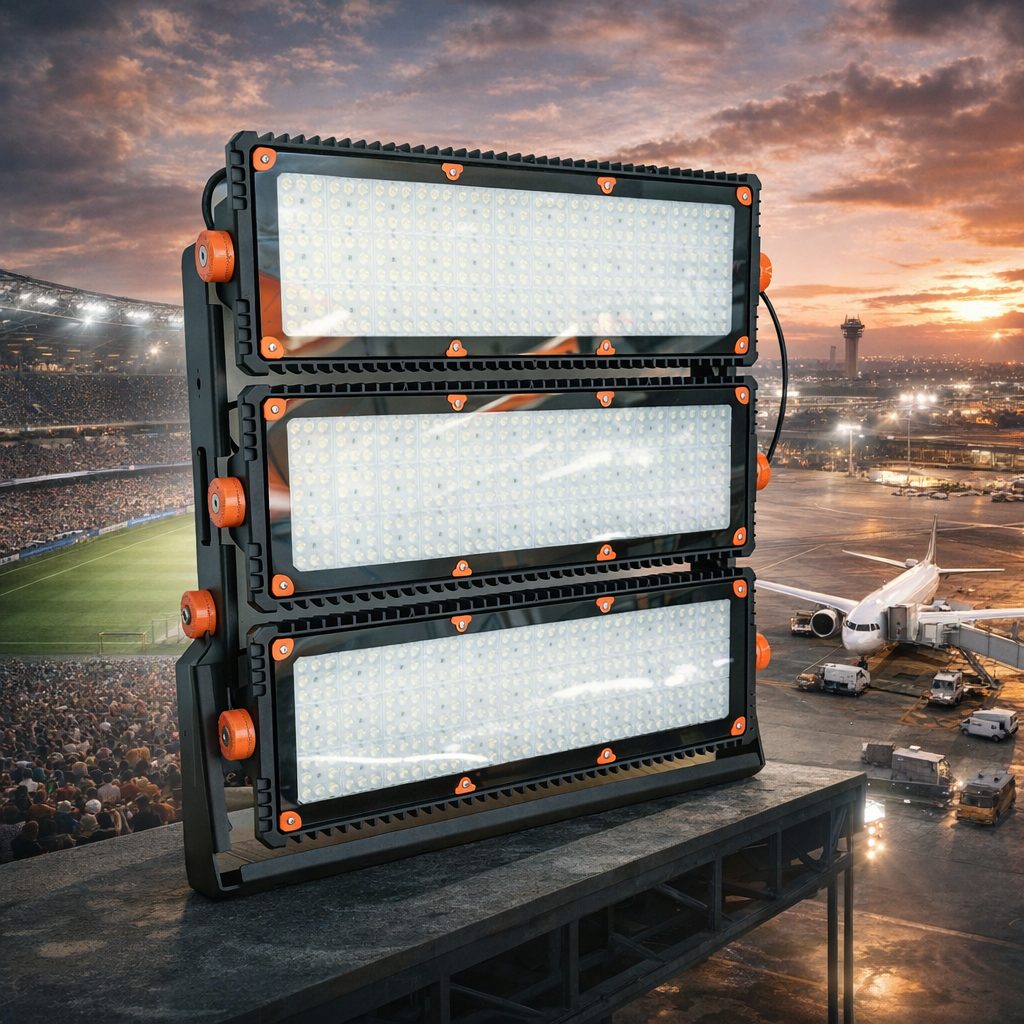
With the rapid development of LED technology, more and more outdoor lighting projects are upgrading from traditional lighting systems to LED lighting solutions. In large outdoor areas such as stadiums, airports, ports, and industrial zones, LED Flood Lights are gradually replacing traditional Metal Halide Flood Lights.
Compared with conventional lighting technology, LED flood lights provide higher energy efficiency, longer lifespan, and lower maintenance costs. As a result, many modern stadium lighting and airport lighting projects are now using LED flood lights as the primary lighting solution.
In this article, we will compare LED Flood Light vs Metal Halide Flood Light in terms of efficiency, lifespan, maintenance, and practical applications to help determine which lighting solution is better for large-scale outdoor projects.
What Is an LED Flood Light?
An LED Flood Light is a high-intensity lighting fixture designed to provide bright and uniform illumination for large outdoor areas. It uses advanced LED chips as the light source, delivering strong brightness while maintaining high energy efficiency.
Modern outdoor LED flood lights typically feature:
- High brightness output
- Energy-efficient lighting performance
- Long operating lifespan
- IP65 or IP66 waterproof protection
- Reliable performance in harsh outdoor environments
Because of these advantages, LED flood lights are widely used in many applications such as:
- Stadium lighting
- Airport lighting
- Port and harbor lighting
- Parking lot lighting
- Industrial area lighting
As LED technology continues to improve, LED flood lights have become an essential lighting solution for modern outdoor projects.
What Is a Metal Halide Flood Light?
A Metal Halide Flood Light is a traditional high-intensity discharge (HID) lamp that has been widely used in outdoor lighting for many years.
Metal halide lamps generate light through an electrical arc inside a tube containing metal halide gases. Although this technology was commonly used in stadiums and industrial lighting systems in the past, it is now gradually being replaced by more efficient LED lighting.
LED Flood Light vs Metal Halide Flood Light: Key Differences
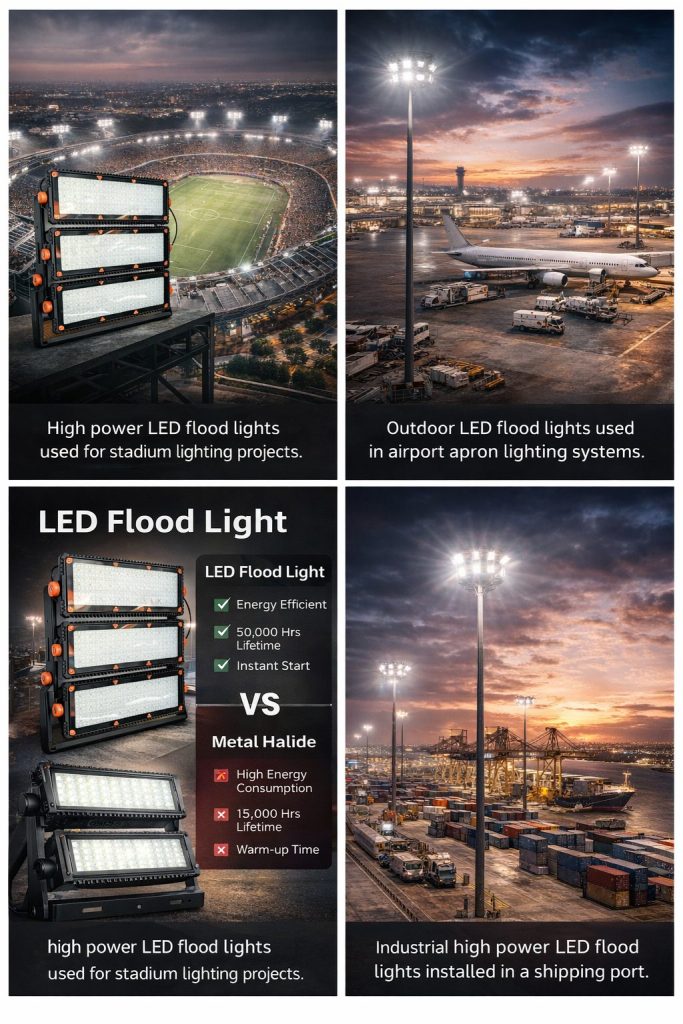
When selecting lighting equipment for large-scale outdoor projects, several factors must be considered, including energy efficiency, lifespan, maintenance requirements, and lighting performance.
1.Energy Efficiency
LED flood lights typically achieve a luminous efficiency of:
120–180 lumens per watt
In comparison, traditional metal halide flood lights usually provide:
70–90 lumens per watt
This means LED flood lights can reduce energy consumption by 50%–70% while delivering the same level of brightness. For projects such as stadium lighting or airport lighting that operate for long hours, this leads to significant energy savings.
2.Lifespan
Lamp lifespan plays an important role in determining maintenance costs for large lighting installations.
|
Lighting Type |
Lifespan |
|
LED Flood Light |
50,000–100,000 hours |
|
Metal Halide |
10,000–15,000 hours |
LED flood lights generally last three to five times longer than metal halide lamps, greatly reducing replacement frequency and maintenance costs.
3.Start-Up Time
Metal halide flood lights require 5–10 minutes of warm-up time before reaching full brightness.
In contrast, LED flood lights provide instant illumination, reaching maximum brightness immediately after being switched on. This feature is particularly important for stadium events and airport lighting systems where reliable and immediate lighting is required.
Engineering Application: Stadium Lighting
In stadium lighting projects, lighting equipment must meet several important requirements:
- High brightness levels
- Uniform light distribution
- Low glare performance
- Stable and reliable operation
Traditional stadiums often used metal halide flood lights, but many modern stadiums have upgraded to high power LED flood lights.
LED flood lights offer several advantages for stadium lighting, including:
- Higher lighting efficiency
- Lower energy consumption
- Longer service life
- Reduced maintenance costs
Because of these benefits, LED flood lights are now widely used in professional stadium lighting systems.
Engineering Application: Airport Lighting
In airport lighting systems, reliability and stability are extremely important.
LED flood lights are commonly used for:
- Airport apron lighting
- Airport terminal area lighting
- Large open-area illumination
Compared with metal halide lamps, LED flood lights provide:
- Instant start-up
- Stable lighting performance
- Lower energy consumption
- Longer operating lifespan
These advantages make LED flood lights an ideal choice for modern airport lighting projects.
Why More Projects Are Choosing LED Flood Lights
With the increasing demand for energy-efficient infrastructure and sustainable development, more lighting projects are upgrading to LED technology.
LED flood lights offer several important advantages:
- Higher energy efficiency
- Longer lifespan
- Lower maintenance cost
- Environmentally friendly performance
For these reasons, LED flood lights have become the preferred lighting solution for stadiums, airports, ports, and industrial lighting projects.
Contact Us for Professional LED Flood Light Solutions
If you are looking for a reliable LED Flood Light manufacturer or LED Flood Light supplier, MIC LED can provide professional outdoor lighting solutions.
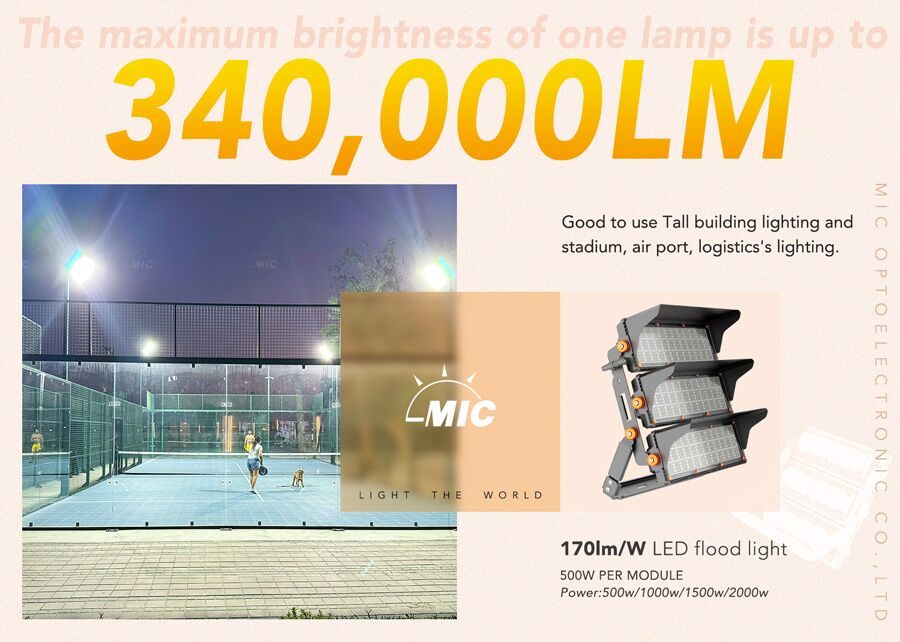
Our LED flood lights are widely used in:
- Stadium lighting projects
- Airport lighting systems
- Port and harbor lighting
- Industrial area lighting
With experienced engineering teams and strict quality control systems, MIC LED provides high-quality outdoor LED flood lights for global customers.
Feel free to contact us for product information, project consultation, or quotation.
- Email:micled@mic-led.com
- website:https://www.mic-led.com
- WhatsApp:+86 13543343078